 ultimate-guide
Landlord Legal Requirements for Door Locks: What the Law Says
Last Updated: November 4, 2026
Quick Summary
Landlord legal requirements for door locks are set mainly by the Housing Act 2004, the Homes (Fitness for Human Habitation) Act 2018 and the tenancy agreement. A landlord must keep the property fit for habitation, which normally means working locks on external doors, and the rules vary across England, Wales, Scotland and Northern Ireland.
- Landlords must keep the property fit for habitation, including reasonable security for occupants.
- Working locks on external doors are where the legal duty bites hardest.
- Bedroom locks are generally not required in an ordinary family home.
- HMO licence conditions can restrict or require locks on room doors.
- Landlords generally need to give at least 24 hours' written notice before a visit.
Table of Contents
- Locks on external doors and property security
- Landlord Responsibility for Broken Door Locks
- Tenant Rights When Changing Locks
- Landlord Access Without Permission: Where the Line Sits
- Who Pays for Lock Replacement in a Rental Property?
- Jurisdiction, Property Type and Fire-Safety Rules That Change the Answer
- Booking a Lock Check or Urgent Repair Before a Dispute Starts
- Frequently Asked Questions
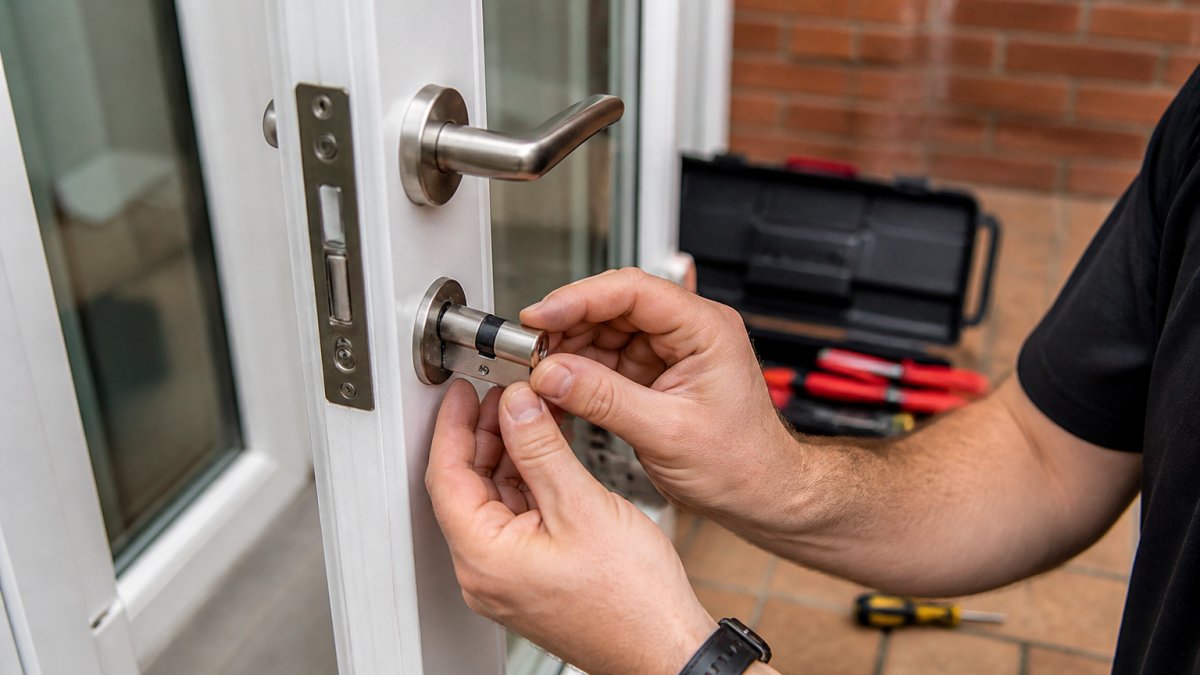
Most tenants assume a locked front door is simply part of the deal, but the law on door locks in UK rented homes is more nuanced than many realise. Confusion over this is common, usually when a tenant is locked out or a lock has failed and nobody is sure who should pay. For a step-by-step explanation of how a lock is actually replaced, see how to change a euro cylinder lock. Landlord legal requirements for door locks are set mainly by the Housing Act 2004, the Homes (Fitness for Human Habitation) Act 2018 and the tenancy agreement itself. This guide sets out what the law says and where the grey areas sit.
Landlord legal requirements for door locks are defined by statute rather than a single lock standard. A landlord must keep the property fit for human habitation, which includes a reasonable level of security for the occupants (Guide for tenants: Homes (Fitness for Human Habitation) Act 2018). That duty is broad, so the practical answer depends on the property and the wording of the tenancy.
Landlord legal requirements for door locks shift depending on where the property sits. England, Wales, Scotland and Northern Ireland each have their own housing rules, so check the regime that applies to your home before acting.
Locks on external doors and property security
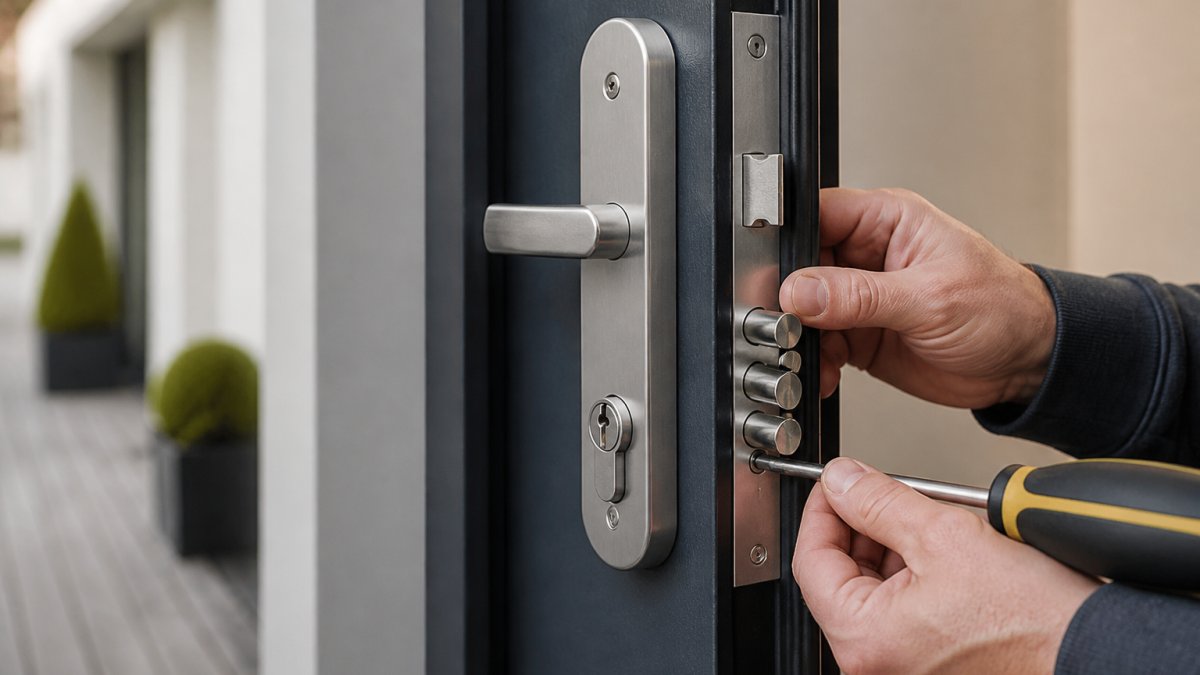
External doors are where the legal duty bites hardest. To understand the main types of residential door locks and their security standards, see residential door locks: types and security. A front or back door that does not lock, or that cannot be secured against entry, can make a property unfit for habitation. Local authorities can take enforcement action under the Housing Act 2004 where a hazard affects safety or security (Housing Health and Safety Rating System (HHSRS): Enforcement guidance). Insurers generally expect working locks on external doors, and policy terms should be checked, as a missing or defective lock may affect cover after a burglary.
Locks on bedroom and internal doors
Bedroom and internal doors are treated differently. There is generally no statutory requirement for a lock on a bedroom door in an ordinary family home. In houses in multiple occupation, however, licensing conditions and fire-safety rules can restrict locks on room doors, because occupants must be able to escape quickly. Check the licence conditions before fitting a lock to a shared-house room.
Landlord Responsibility for Broken Door Locks
When a lock breaks, the landlord is usually responsible for repair if the fault is mechanical or the result of normal wear. Tenants are generally responsible for damage they cause themselves, such as a snapped key left in the lock or a forced entry.
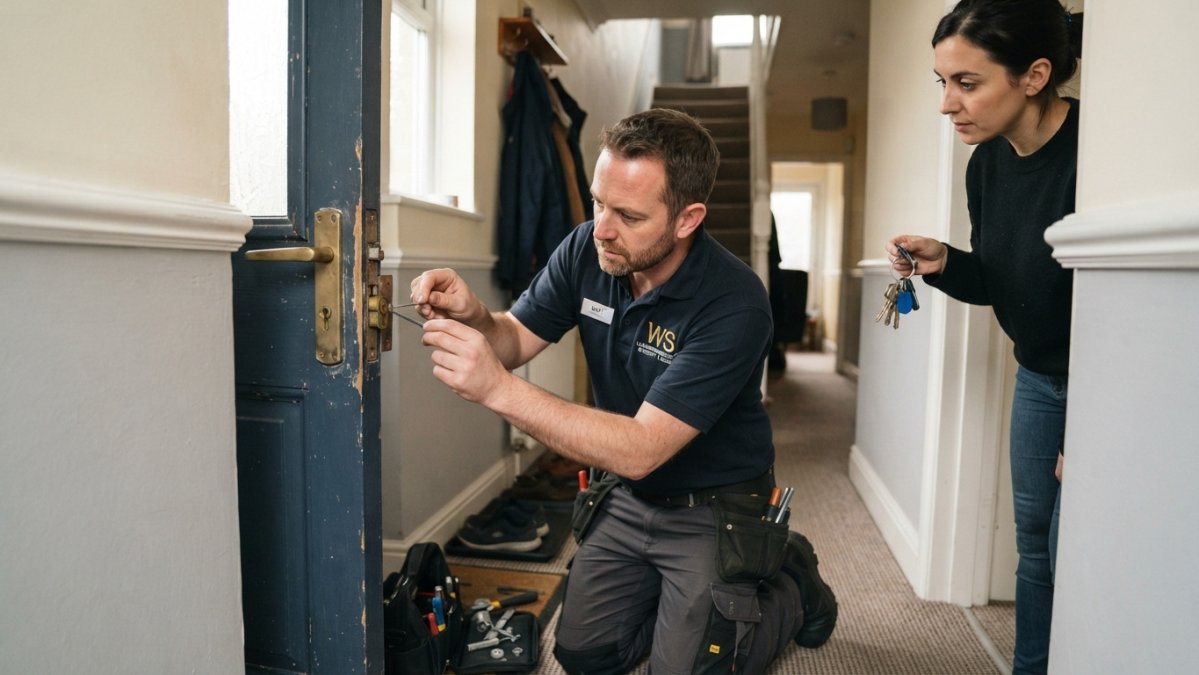
Many disputes arise because the tenancy agreement and the law point in different directions. A clause that makes the tenant liable for all lock repairs may be unenforceable where it conflicts with the landlord's repairing obligations under the Landlord and Tenant Act 1985.
Broken or faulty locks and how quickly they should be fixed
There is no fixed statutory deadline for every lock repair, but the landlord must act within a reasonable time. For a lock that leaves the home insecure, most tenants and courts would expect prompt attention, often the same day or next working day. Tenants should report faults in writing, keeping a record of when they reported them and how the landlord responded. Before deciding whether a jammed or faulty lock needs a professional, it helps to understand why door locks jam and how to fix them.
Tenant Rights When Changing Locks
Tenants can often change locks, but they should not do so without thought. Changing a lock without permission may breach the tenancy agreement, and the landlord may be entitled to a copy of the new key.
Tenant permission and landlord access
Where a tenant wants a new lock, the sensible route is to ask the landlord first and agree who pays and who keeps a spare key. Written agreement avoids disputes at the end of the tenancy. Where the tenant has a legitimate reason to change the lock, such as after domestic abuse, stalking or a lost key, the tenant should explain the situation and seek advice quickly. Guidance on how locksmith services for rental properties are typically arranged can help when agreeing who covers the cost.
Landlord Access Without Permission: Where the Line Sits
A landlord does not have an automatic right to enter the home. Under the tenant's right to quiet enjoyment, a landlord must generally give at least 24 hours' written notice before a visit, except in an emergency. Changing a lock to keep a tenant out, or entering without permission, can amount to unlawful eviction or harassment.
Who Pays for Lock Replacement in a Rental Property?
The answer usually follows the cause. If the lock failed through age, wear or a fault, the landlord normally pays. If the tenant lost the keys, damaged the lock or insisted on an unauthorised change, the tenant may be charged. Keep receipts and photographs, as evidence may be needed if costs are deducted from a deposit.
Jurisdiction, Property Type and Fire-Safety Rules That Change the Answer
Most guides treat 'UK landlord law' as one thing. It is not. The rules on door locks, room locks and fire egress differ across England, Wales, Scotland and Northern Ireland, and they change again by property type. This section sets out the distinctions that actually change the answer.
Call us 24/7: +44 77321 89721 →
Jurisdiction. In England, the Housing Act 2004 and the Homes (Fitness for Human Habitation) Act 2018 set the main duties, with HMO licensing under the Housing Act 2004 and the Licensing and Management of Houses in Multiple Occupation (Additional Provisions) (England) Regulations 2007.
Property type and HMOs. In an ordinary self-contained family home, there is generally no statutory requirement for a lock on a bedroom door. In an HMO, the picture changes. Licence conditions frequently require self-closing fire doors to shared rooms, restrict locks that could trap an occupant, and may require thumb-turn or keyless egress on the main entrance.
Fire safety and emergency egress. The Regulatory Reform (Fire Safety) Order 2005 applies to the common parts of buildings containing flats and to HMOs, and it requires that escape routes can be used safely.
What this means in practice. Before changing a lock, identify (1) the jurisdiction, (2) whether the property is licensed or an HMO, and (3) whether the door is on an escape route. Those three questions will help you judge whether a standard lock is suitable, whether a thumb-turn is required, or whether the licence conditions dictate something specific.
Watch out: fitting a key-operated deadlock to a flat entrance door that opens onto a shared escape route can create a fire-safety problem, so check egress before security.
The rules on locks differ by jurisdiction, property type and fire-safety considerations, as summarised below.
| Factor | Position | Key point |
|---|---|---|
| Jurisdiction | England, Wales, Scotland, Northern Ireland | Each has its own housing rules |
| Ordinary family home | No statutory bedroom lock requirement | Check tenancy and local rules |
| HMO | Licence conditions decide | Locks may be restricted or required |
| Escape route door | Open from inside without a key | Deadlock can delay evacuation |
| Fire safety | Regulatory Reform (Fire Safety) Order 2005 | Applies to common parts and HMOs |
Booking a Lock Check or Urgent Repair Before a Dispute Starts
If a lock is faulty or you are locked out, act before a disagreement hardens. Record the fault, notify the landlord in writing, and get the lock inspected so you have an independent view of the cause. WS Locksmiths provides 24/7 emergency locksmith services across Crawley, Horsham, Horley and Redhill, with fully trained and vetted locksmiths, so you can get the lock assessed and secured. For current prices or a quote, contact WS Locksmiths directly. Call us 24/7 on +44 77321 89721. If you are ready to act, see whether you have to pay a locksmith straight away.
Frequently Asked Questions
Are landlords legally required to provide locks on rental property doors?
In England, landlords must keep the structure and exterior of a property in repair and keep installations for the supply of water, gas and electricity in working order under the Landlord and Tenant Act 1985. Locks on external doors form part of keeping the property secure and are generally treated as the landlord's responsibility to maintain. Specific obligations can differ across England, Wales, Scotland and Northern Ireland, and in houses in multiple occupation (HMOs) additional licensing conditions can apply, so check the rules that govern your property type and region.
Can a landlord refuse to let a tenant put a lock on their bedroom door?
Many tenancy agreements restrict alterations, so a tenant should ask for written permission before fitting a new lock. A landlord may refuse, but a refusal should not leave the tenant unable to feel secure in their own room without good reason. In shared houses and HMOs, fire-safety rules may limit locks that prevent escape, so any internal lock should allow quick egress from the inside.
Who is responsible for repairing a broken door lock in a rented property?
Where a lock fails through wear and tear or a mechanical fault, the landlord is usually responsible for arranging repair, particularly for external doors that affect security. Tenants are generally responsible for damage they cause themselves. Report the fault in writing, keep a record, and allow reasonable access for the repair. If the landlord does not act, a tenant can seek advice from the local council or a housing advice service.
Can a tenant change the locks without the landlord's permission?
Changing a lock without permission can breach the tenancy agreement and may lead to disputes over keys and access. Where a tenant has a safety reason, such as domestic abuse, stalking or a burglary, they should raise it urgently with the landlord and seek advice from a support organisation. Keep a copy of any new key given to the landlord, unless there is a specific safety reason not to do so.
Can a landlord enter a rented property without a key or the tenant's permission?
No. A landlord generally needs to give at least 24 hours' written notice before visiting, except in an emergency, and must respect the tenant's right to quiet enjoyment of the home. Entering without notice or permission can be a breach of the tenancy and may amount to harassment or unlawful eviction. Agree a visit time in writing wherever possible.
Can a landlord keep a spare key to a rental property?
Yes, a landlord can keep a spare key, and most tenancy agreements expect it so the landlord can access the property for repairs or in an emergency. The landlord should not use it to enter without proper notice or the tenant's agreement, except where there is a genuine emergency. Ask the landlord to confirm in writing when they will use a key.
What should a tenant do if a landlord will not repair a faulty lock?
Start by reporting the fault in writing and giving a reasonable deadline. If the lock affects security or the landlord still does not respond, contact the local council's environmental health or private rented sector team, or a housing advice service such as Shelter. For an urgent lock failure that leaves the home insecure, a tenant may arrange a locksmith and seek to recover reasonable costs, but get advice first, keep receipts and photographs, and avoid acting without written evidence.
Are landlords required to provide keyless locks on internal doors?
No general legal requirement obliges a landlord to fit keyless locks on internal doors. The focus of most rules is on external door security and on safe escape routes. In HMOs and flats, fire-safety expectations mean internal locks should not prevent occupants from leaving quickly. Keyless or thumbturn-operated options that open from the inside can help meet both security and escape needs.