 blog
blog
Locksmith Services for Rental Properties: A Guide
Table of Contents
- Why Locksmith Services Matter for Rental Properties
- Landlord Lock Change Requirements Between Tenancies
- Master Key Systems for Property Management
- Emergency Locksmith Response for Rental Properties
- Tenant Lockout Policy and Best Practices
- Security Upgrades and Lock Replacements
- Choosing the Right Locksmith for Your Rental Portfolio
- Frequently Asked Questions
Last Updated: 20 September 2026
Why Locksmith Services Matter for Rental Properties
Property managers and landlords face a constant tension: tenants need reliable access, security must be maintained, and costs need controlling. This is where locksmith services for rental properties become essential. A single lockout at 11 PM on a Sunday can spiral into tenant complaints, emergency callout fees, and lost rental income. More critically, security breaches after a tenancy ends expose your property and liability.
The reality is that most landlords treat locks as an afterthought until something breaks. By then, the damage is done, both to your reputation and your bottom line. WS Locksmiths works with property managers to prevent these crises before they start.
Proper locksmith services for rental properties cover three core areas: emergency access when tenants are locked out, systematic lock changes between tenancies, and security upgrades that protect your investment. Each addresses a specific vulnerability in property management.
Landlord Lock Change Requirements Between Tenancies
Your legal obligation is straightforward: every tenancy must begin with locks that only the new tenant can access. This isn't just best practice, it's a fundamental security principle that protects both you and your incoming residents.
Between tenancies, you must change or rekey every external lock. A previous tenant may still have keys, copies may exist with family members, or keys could have been lost and found by unknown parties. Simply rekeying is often more cost-effective than full replacement, and it achieves the same security outcome: the old keys no longer work.
The timeline matters. Ideally, lock changes happen within 48 hours of a tenant moving out. This minimises the window where the property sits with compromised access control. Many landlords schedule this work before the final inspection, ensuring the new tenant receives keys at handover.
WS Locksmiths handles bulk lock changes for property portfolios, which simplifies the process across multiple units. When you manage five or ten properties, coordinating individual locksmith appointments becomes inefficient. A provider experienced in locksmith services for rental properties can schedule block appointments, reducing call-out fees and ensuring consistent timing.
Master Key Systems for Property Management
A master key system allows you to access all units with a single key while each tenant's individual key opens only their own door. This is the operational backbone of professional property management.
The system works through a hierarchical structure: your master key operates every lock, tenant keys operate only their assigned lock, and maintenance staff might have keys to common areas. This gives you emergency access without compromising tenant privacy, and it simplifies lock changes, you don't need to carry dozens of individual keys to each property.
Setting up a master key system requires planning before installation. You must decide which areas are included, how many levels of access you need, and whether temporary keys for contractors or cleaners fit into the structure. This is where experience matters. A locksmith unfamiliar with property management may suggest a system that sounds good in theory but creates operational headaches in practice.
The cost of a master key system is offset by operational efficiency. You reduce lost-key incidents, simplify emergency access, and cut the time spent managing physical keys.
Emergency Locksmith Response for Rental Properties
A tenant locked out at 2 AM on a Saturday isn't just their problem, it's yours. They can't sleep, they're frustrated, and they're looking at your emergency contact. If you can't respond quickly, they'll call a locksmith themselves and expect you to reimburse them.
The best approach is a pre-arranged agreement with a reliable locksmith provider. WS Locksmiths operates 24/7 and understands that rental properties need faster response times than residential homeowners. Fast response times keep tenants satisfied and prevent them from taking matters into their own hands.
When you have a contract with a trusted provider, you also avoid the risk of unreliable or expensive locksmiths. Some locksmiths charge premium rates for out-of-hours callouts and may not verify tenant identity properly before opening the door. A trained, vetted locksmith reduces both costs and security risks.
Document your emergency locksmith policy in the tenancy agreement. Specify what constitutes a lockout emergency (lost keys, keys locked inside the property) versus situations the tenant should handle themselves (broken locks that still function, worn keys). This clarity prevents disputes over who pays for the callout.
Tenant Lockout Policy and Best Practices
Your lockout policy sets expectations and protects you from being treated as a 24/7 key replacement service. A clear policy reduces emergency callouts and encourages tenants to manage keys responsibly.
A typical policy includes:
- First lockout per year: covered by landlord (emergency locksmith called)
- Subsequent lockouts: tenant pays the full locksmith fee
- Lost keys: tenant pays for lock replacement or rekeying
- Keys locked inside the property: tenant pays for emergency access
- Damage to locks during lockout: tenant pays for repairs
This structure is fair, the first incident is treated as an accident, but repeated incidents become the tenant's financial responsibility. Most tenants take key management seriously once they understand the costs.
Communicate this policy at the start of the tenancy. Include it in your tenancy agreement and provide a copy when you hand over keys. When a lockout does occur, reference the policy calmly and professionally. Most tenants accept it without complaint if they've been informed upfront.
Some landlords offer a spare key held at the property (in a secure location) or with a trusted neighbour. This reduces emergency callouts and builds goodwill, but it requires careful management to ensure the spare is used only in genuine emergencies.
Security Upgrades and Lock Replacements
Older locks wear out, and worn locks are security vulnerabilities. A lock that sticks, requires jiggling the key, or doesn't fully engage is both frustrating for tenants and a sign that replacement is overdue.
Common reasons for lock replacement include:
- Worn cylinders that no longer grip keys properly
- Damaged deadbolts that won't fully retract
- Locks that have been forced during break-ins
- Upgrading to anti-snap locks for improved security
- Modernising to match building standards
Anti-snap locks are increasingly important for rental properties. These locks resist the forcing technique called "lock snapping," where a burglar breaks the lock cylinder and turns the mechanism directly. Standard locks are vulnerable; anti-snap locks are engineered to prevent this attack. If your property is in an area with burglary activity, upgrading to anti-snap locks is a worthwhile investment.
WS Locksmiths can assess your current locks and recommend upgrades based on your property's security needs and local risks. A professional evaluation identifies weak points that you might miss, such as locks on side gates, basement windows, or outbuildings.
Document all lock replacements and upgrades. Keep records of what was installed, when, and why. This documentation supports insurance claims if a break-in occurs and demonstrates that you've taken reasonable security measures.
Choosing the Right Locksmith for Your Rental Portfolio
Not all locksmiths are equipped to handle the demands of property management. You need a provider who understands landlord responsibilities, responds quickly to emergencies, and can manage bulk work efficiently.
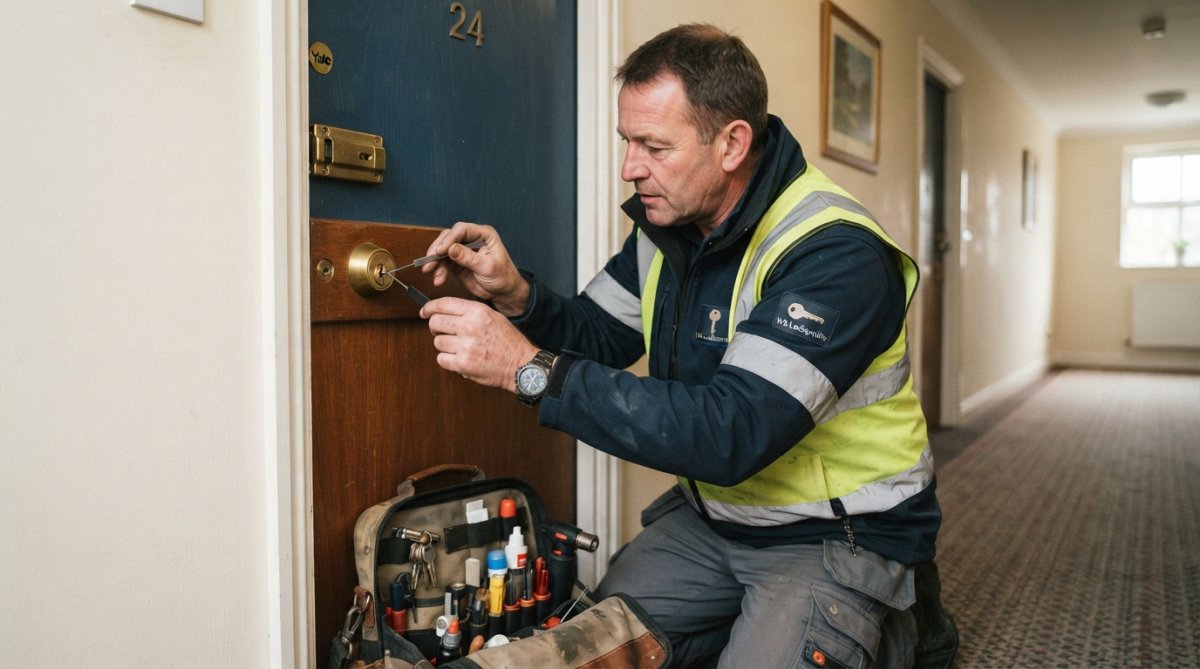
The key criteria are: 24/7 availability, fast response times, fully trained and vetted staff, and experience with locksmith services for rental properties. A locksmith who specialises in residential emergency callouts understands the time pressure you face.
WS Locksmiths ticks these boxes.
| Consideration | What to Look For | Why It Matters |
|---|---|---|
| Emergency availability | 24/7 response, 30-minute target arrival | Tenants locked out don't wait; slow response damages relationships |
| Staff training | Fully trained and vetted locksmiths | Untrained staff damage doors, compromise security, create liability |
| Portfolio experience | Bulk lock changes, master key systems | Property managers need efficiency; residential-only locksmiths are slow |
| Pricing transparency | Hidden costs and surprise charges erode trust | |
| Security expertise | Anti-snap locks, security assessments, recommendations | Generic locksmiths miss vulnerabilities specific to rental properties |
Frequently Asked Questions
Are landlords legally required to change locks between tenancies?
Whilst there is no explicit legal requirement to change locks, landlords have a duty of care under the Landlord and Tenant Act 1985 to maintain the property in good condition. This includes ensuring security. Good practice dictates changing or rekeying locks between tenants to prevent unauthorised access from previous occupants. A professional locksmith can handle this efficiently and provide documentation of the work completed.
How can a master key system help manage multiple rental properties?
Master key systems for property management allow you to access all your rental units with a single key whilst giving each tenant their own individual key. This streamlines maintenance visits, emergency access, and inspections across multiple properties. A trained locksmith can design and install a system tailored to your portfolio size and security needs, reducing the burden of carrying multiple keys.
What should I do if a tenant loses their keys?
Your tenant lockout policy should clarify whether tenants bear the cost of emergency locksmith calls or if this is a landlord expense. Most landlords charge tenants for lockouts unless it results from a property defect. Contact a reliable locksmith immediately to regain access. Professional locksmiths can verify the tenant's identity and complete the work quickly, minimising disruption to the property.
How quickly can a locksmith respond to an emergency at a rental property?
Response times vary by provider, but professional locksmith services offering 24/7 availability typically aim for fast attendance depending on location and call volume. When selecting a locksmith for your rental portfolio, confirm their response time guarantee in writing. Fast response is essential for minimising tenant inconvenience and reducing security risks during emergencies.
Locksmith services for rental properties aren't optional, they're a core part of responsible property management. When a lockout happens at 2 AM or a tenancy ends without secure lock changes, you need a provider who responds immediately and gets it right. WS Locksmiths delivers that reliability. Call us 24/7 at +44 77321 89721 to discuss your property's security needs, arrange bulk lock changes, or handle an emergency lockout. We're here when you need us most.