 how-to
Why Do Door Locks Jam? Causes and Fixes
Table of Contents
- Common Reasons Why Door Locks Jam
- How to Lubricate a Stiff Door Lock
- Door Alignment Issues That Cause Jamming
- Step-by-Step Troubleshooting for a Jammed Lock
- When to Call an Emergency Locksmith
- Preventing Future Lock Jams
- Frequently Asked Questions
Last Updated: 13 September 2026
Common Reasons Why Door Locks Jam
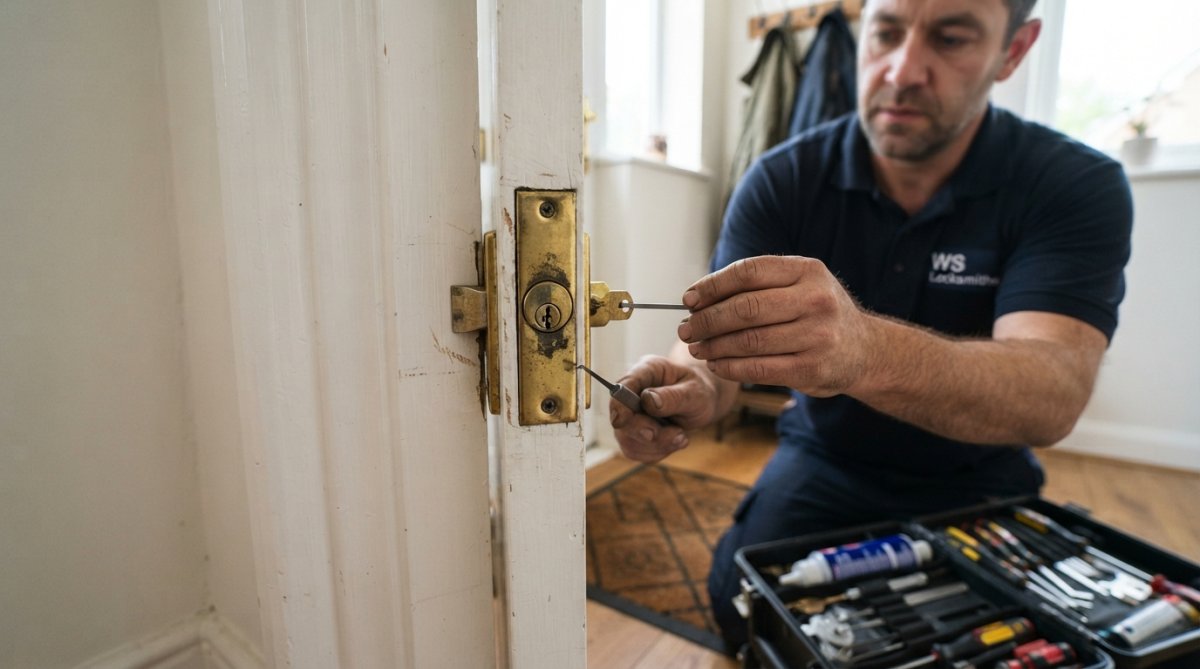
A door lock jams when the internal mechanism can no longer move freely, and the cause almost always falls into one of two categories: internal wear and contamination, or external movement of the door itself. Understanding which one you're dealing with saves you from the frustrating cycle of repeatedly oiling a lock that was never the real problem. At WS Locksmiths, we attend lockouts and jammed locks every week, and the pattern is remarkably consistent. Below, we explain what actually causes door locks to jam, how to free a stuck mechanism, and when the job needs a professional rather than a can of lubricant.
Worn Internal Components and Debris
Inside every cylinder sits a row of small pins, springs and a rotating plug. Over years of use, those springs weaken and the pins wear unevenly, so the key no longer lifts them to the exact height the lock requires. Add dust, grit and the graphite residue of old lubricants, and the mechanism starts to bind. A common mistake is assuming a stiff key means the lock is dry. Often it means the opposite: the cylinder is packed with debris and needs cleaning before any lubricant goes near it.
Weather and Temperature Effects
Wooden doors swell in damp weather and shrink in summer heat, and that movement shifts the lock body relative to the strike plate. Metal components expand and contract too, which is why a lock that turns easily in spring can seize in a cold snap. If your lock only jams at certain times of year, the mechanism is probably fine and the door has simply moved.
How to Lubricate a Stiff Door Lock
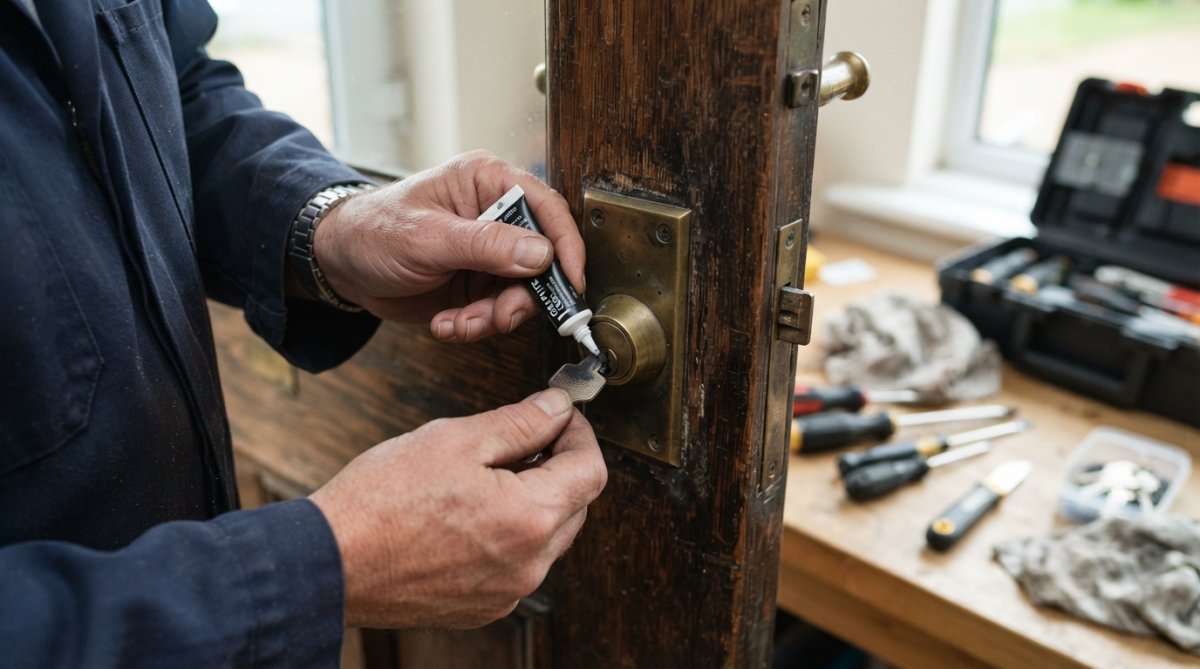
The right way to lubricate a stiff door lock is to use a dry lubricant, not household oil. A dedicated lock lubricant, or graphite powder for older cylinders, penetrates the mechanism and then dries, leaving no sticky film behind (HSE and metalworking fluids).
Here's a common method:
- Insert the key and work it gently in and out a few times to loosen surface debris.
- Spray a short burst of dry lubricant into the keyway, or puff a small amount of graphite powder into the cylinder.
- Turn the key through its full range of motion several times to spread the lubricant.
- Wipe the key clean and repeat once if the lock still feels tight.
Door Alignment Issues That Cause Jamming
Door alignment issues are the hidden cause behind a large share of jams, and they have nothing to do with the lock itself. When a door sags on its hinges or the frame shifts, the latch no longer lines up with the strike plate. The key turns, but the bolt catches on the edge of the plate and refuses to throw. If your lock works perfectly when the door is open but jams when it's closed, alignment is almost certainly the culprit.
Checking Hinges and Strike Plates
Start by inspecting the hinges for loose screws or worn pins, since a hinge that has dropped a few millimetres will pull the whole door out of square. Then look at the strike plate on the frame. A tell-tale sign of misalignment is a shiny, scored mark where the latch has been scraping metal. Tightening hinge screws often resolves the problem outright. If the strike plate sits too high or too low, the plate itself may need adjusting or refitting, which is a job best left to someone with the right tools.
Step-by-Step Troubleshooting for a Jammed Lock
Work through these steps in order, and stop as soon as the lock frees up. Most jammed locks respond to the first two or three.
| Step | What to Do | Why It Helps |
|---|---|---|
| 1 | Check the door is fully closed and the handle is lifted | Removes false jams from a door sitting open |
| 2 | Turn the key gently both ways | Frees pins caught mid-travel |
| 3 | Apply dry lubricant to the keyway | Loosens debris without adding oil |
| 4 | Check hinge screws and strike plate | Rules out alignment as the cause |
| 5 | Try a spare key | Confirms whether the key or the lock is worn |
If none of these work, stop. Continuing to force the mechanism risks damaging the cylinder beyond repair.
When to Call an Emergency Locksmith
Call an emergency locksmith when the key snaps, the cylinder spins freely without engaging, or you are locked out with no working spare. These situations need proper tools and, in the case of a snapped key, extraction equipment that most households don't own. It's also worth calling a professional if the same lock has jammed more than twice in a year, because recurring jams usually signal worn internal components that will eventually fail completely (Guide to maintaining roadworthiness: commercial goods and passenger carrying vehicles).
A word of caution: not every locksmith who answers the phone at 2am is properly trained or vetted. Ask directly whether the engineer is vetted, and confirm the callout terms before anyone sets off. WS Locksmiths operates around the clock, including weekends and holidays, with fully trained and vetted locksmiths, so you know exactly who is arriving at your door. How do I know you'll actually show up quickly at 2 AM on a Sunday, or is that just what you say on your website? We pride ourselves on fast response times, even at unsociable hours, because we understand the urgency of a lockout. Our 24/7 availability means we're genuinely ready to assist whenever you need us. I've had dodgy locksmiths before who weren't properly trained. How can I be sure your team is actually vetted and won't damage my door or lock? All our locksmiths are fully trained and vetted, ensuring they have the expertise and professionalism to handle your locks with care and efficiency. We prioritise a reliable and honest service to give you peace of mind. I'm locked out of my flat right now, can you definitely get here within the next hour, or should I call someone else? We aim for quick arrival times for all emergency callouts. While we can't guarantee an exact minute, our fast response times mean we'll get to you as swiftly as possible to resolve your lockout.
Preventing Future Lock Jams
Prevention comes down to three habits: lubricate correctly, keep the mechanism clean, and address alignment early. Use a dry lubricant once or twice a year rather than reaching for general-purpose oil. Never hang a heavy keyring from a door key, as the weight gradually wears the cylinder. And if you notice the door catching on the frame, fix it before the latch starts grinding against the strike plate. For properties where security matters, upgrading to a high-security cylinder with anti-snap protection also removes a common weak point. WS Locksmiths handles everything from single lock repairs to full upgrades for rental properties, and we'll recommend only what your door actually needs. I need anti-snap locks fitted to my rental properties across Crawley and Horsham. Do you handle bulk jobs like that, or are you just for emergency callouts? Yes, we absolutely handle bulk jobs for rental properties, including fitting high-security anti-snap locks. We cater to both emergency callouts and planned security upgrades for property managers. After my break-in last month, I'm paranoid about security. Will you recommend the right locks for my type of property, or will you just upsell me stuff I don't need? We understand your concerns after a break-in. Our fully trained and vetted locksmiths will assess your property's specific needs and recommend appropriate high-security solutions without upselling unnecessary products. Your peace of mind and security are our priority.
Frequently Asked Questions
Why does my door lock feel stiff when turning the key?
A stiff lock usually means the internal parts are dry, dirty, or slightly worn. Dust and grit build up inside the cylinder, and without lubrication the pins drag against the key. Extreme cold can also thicken any old oil, making the key harder to turn. Try a dry graphite or PTFE lubricant first. If the key still catches after cleaning, the cylinder may be worn and need replacing by a locksmith.
Can I use WD-40 on a jammed door lock?
WD-40 is a water displacer, not a long-term lubricant. It can free a stuck lock temporarily, but it attracts dust and grit that clog the cylinder over time, making the problem worse. For a stiff lock, use a dry graphite powder or a PTFE-based lock lubricant instead. If the lock is still jammed after a proper application, call a locksmith rather than forcing the key.
How do I know if my door lock needs replacing?
Signs include a key that sticks or only turns with force, visible wear on the key itself, a wobbly cylinder, or a lock that has been forced during a break-in attempt. If lubrication and alignment checks do not fix the jamming, the internal mechanism is likely worn. A locksmith can confirm whether a repair is enough or a full replacement is safer, especially for older locks without anti-snap or anti-pick features.
What should I do if my key is stuck in the lock?
Do not yank or twist the key hard, as it can snap inside the cylinder. Spray a small amount of dry lubricant around the key and wait a minute, then try gentle wiggling while turning. If the key still will not come out, stop and call a locksmith. Forcing it often leads to a broken key extraction, which costs more and may damage the lock beyond repair.
A jammed lock is rarely a mystery once you know what to look for, but some causes sit beyond a homeowner's toolkit. If the mechanism is worn, the key has snapped, or you're locked out right now, WS Locksmiths can help. Our fully trained and vetted locksmiths offer 24/7 availability, fast response times and honest advice for both homes and businesses, with service on weekends and holidays. Call us 24/7 on +44 77321 89721 and get your door secure again.