 how-to
How to Secure a uPVC Door Without Replacing It
Table of Contents
- Why a uPVC Door Becomes Hard to Secure
- Diagnose the Fault Before You Change Anything
- How to Adjust a uPVC Door So It Locks Properly
- Temporary Security Measures That Need No New Hardware
- Repairing a Faulty Multipoint Lock
- Upgrading the Lock Cylinder and Hardware
- Booking a Professional Assessment Before Your Next Step
- Frequently Asked Questions
Why a uPVC Door Becomes Hard to Secure
Most uPVC doors are not broken when they start to feel insecure. They have usually drifted out of adjustment, the hardware has worn, or a part has come loose over several years of daily use, and a secure uPVC door depends on all of these staying in line. In many cases you can fix the problem without buying a new door.
Here is what usually causes the trouble:
- Settling and sag. Heavy doors slowly drop on their hinges, so the locking points no longer line up with the frame.
- Worn hardware. Multipoint locks, handles and cylinders wear out over time.
- Loose screws. Handle and lock fixings work loose through repeated use.
- Old cylinders. Standard cylinders may be vulnerable to lock snapping, a technique where a thief forces the cylinder and turns it (Keep Your Property Secure - Stop Lock Snapping).
A door that is hard to lock is often a door that is also easier to force, which is why a secure uPVC door needs its locking points to engage fully every time. If the locking points do not engage fully, the door is not held firmly against the frame. Fixing alignment and tightening the mechanism often restores both ease of use and security.
Many homeowners assume the only option is a full replacement. That is rarely necessary. Most of the real gains come from diagnosis, careful adjustment and upgrading individual components.
Need help with a door that will not lock properly? Call WS Locksmiths 24/7 on +44 77321 89721.
Diagnose the Fault Before You Change Anything
Before you buy parts or adjust anything, work out what is actually wrong. A quick check will save time and money, and it stops you replacing a component that was never the cause.
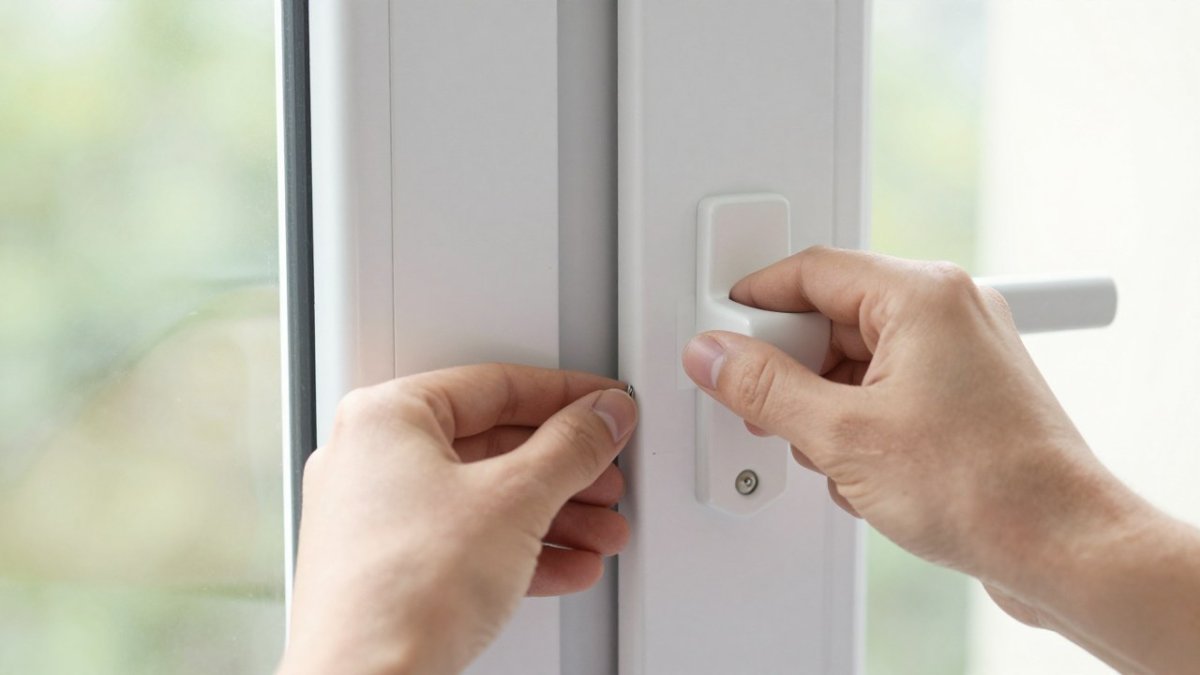
Start with a simple test. Close the door and try to lock it using the key and handle. Note exactly what happens, then match your symptom to the likely cause below.
Symptom: the key turns stiffly or only partway. This usually points to the cylinder or the lock mechanism.
Symptom: the handle moves freely but the door will not lock. The handle is probably not engaging the multipoint mechanism. Check whether the spindle is connected and whether the handle returns to its rest position.
Symptom: the door rubs on the frame or threshold and the locking points miss the keeps. This is almost always alignment. The door has dropped on its hinges or the frame has moved.
Symptom: the door will not lock at all and the handle feels disconnected. This suggests a broken gearbox, a snapped spindle or a failed locking point.
Symptom: the door locks only when you lift or push it. This is a classic sign of misalignment rather than a lock fault. Adjust the hinges and keeps.
Symptom: the key turns but the door will not open. This can be a failed gearbox or a broken locking point. Do not force the handle, as you may damage the mechanism further.
Then look more closely. Check the gap around the door, the position of the handle and the state of the screws. Look for signs of wear on the locking points and the keep in the frame.
If the problem is still unclear after this check, a professional assessment can help. Getting the diagnosis right the first time can avoid replacing parts that were not the cause.
Watch out: do not spray penetrating oil into a multipoint lock or cylinder as a first step. It can attract dirt and make the mechanism worse.
How to Adjust a uPVC Door So It Locks Properly
Most alignment problems can be corrected with a screwdriver and a little patience. The usual adjustment points are the hinges and the keeps.
Follow these steps:
- Open the door and find the hinge screws. Most uPVC doors have three hinges, with adjustment screws on the hinge sides.
- Check which way the door sags. If the handle side has dropped, the door usually needs lifting.
- Make small turns. Turn the adjustment screw a quarter turn at a time.
- Test the lock after each change. Close the door and check whether the locking points engage more easily.
- Adjust the keeps if needed. Loosen the keep screws slightly and move the keep until the locking points sit cleanly.
- Tighten everything once the door locks smoothly.
Be careful not to over-tighten. Forcing the screws can strip the fixings in the frame.
Watch out: Do not force a door shut while the locking points are misaligned. This can bend the mechanism and make the fault much more expensive to repair.
Temporary Security Measures That Need No New Hardware
Sometimes you need better security straight away, before a repair or upgrade is possible. Several measures improve protection without touching the door or its locks, and most are reversible. The trade-off is that they do not fix a faulty lock, and some can affect how quickly you or others can leave in an emergency.
- Lock every locking point. Make sure the multipoint lock is fully engaged every time you leave or go to bed. This is the single most effective no-cost measure, but it only works if the door is aligned and the mechanism is working.
- Use the door's extra locks. Turn any secondary locks or deadlocks as well. If the door has a night latch or a secondary deadlock, use it consistently.
- Use a door restrictor or door chain. This stops the door opening fully if someone forces it partly open. Fit it high enough to be out of reach of a hand through the letterplate, and make sure everyone in the household can operate it. A chain or restrictor can slow escape in a fire, so check that it can be released quickly and that keys are not needed from the inside.
- Check the letterplate. A letterplate that opens from outside can allow a hand to reach the lock inside, so use a letterplate guard if you have one. A guard also reduces draughts and stops keys being fished through.
- Keep the key safe. Do not leave keys in obvious places, and do not hide them outside. If you need a spare key for a carer or family member, use a key safe with a combination rather than a hiding place.
- Use a door wedge or portable alarm. A simple wedge under the door can add resistance from the inside, and a battery-powered door alarm can alert you to movement. These are temporary measures and should not replace a working lock.
These measures do not fix a faulty lock. They reduce the risk while you arrange a proper repair. If the door will not lock at all, a temporary measure is not a substitute for getting the mechanism repaired, because a door that does not latch is still vulnerable.
Watch out: do not block the door with furniture or fit a bar across the inside as a temporary measure. It can prevent escape in an emergency and may damage the door or frame. Use products designed for the purpose and check that they can be removed quickly from the inside.
Repairing a Faulty Multipoint Lock
A multipoint lock is the mechanism that moves several locking points at once when you turn the handle or key. When it fails, the door can feel loose, stick, or refuse to lock at all.
Common faults include:
- A worn gearbox that no longer moves the locking points properly
- A bent or broken spindle linking the handle to the lock
- Locking points that have dropped out of line with the keeps
- Dirty or dry mechanisms that have stopped moving freely
Some of these can be fixed by adjusting the keeps or tightening fixings. Others need the mechanism replaced. A gearbox or spindle replacement is usually a job for a professional, because the wrong part can prevent the door from locking at all.
Common mistake: Replacing the cylinder when the real problem is the gearbox or keeps. A new cylinder will not fix a door that does not engage properly in the frame.
Upgrading the Lock Cylinder and Hardware
If the existing cylinder is old or vulnerable, upgrading it is one of the most effective security improvements you can make. Many modern cylinders are designed to resist lock snapping and drilling.
Look for these features when choosing a replacement:
- Anti-snap design. This makes the cylinder harder to break with force.
- Anti-drill protection. Hardened pins or plates resist drilling attacks.
- British Standard rating. Check the cylinder carries a recognised security rating for euro cylinders.
- Insurance approval. Some insurers ask for specific cylinder standards, so check your policy before choosing.
You can also upgrade the handle and security hardware. Security handles, sash jammers and hinge or dog bolts add extra protection, particularly at the points where a door is most often forced.
Before buying, confirm the replacement fits your door. Cylinder lengths and handle spindle sizes vary, and a wrong measurement wastes time. Pricing depends on the parts you choose and the work involved, so ask WS Locksmiths for a quote before you commit.
The article points to several features to look for when choosing a replacement cylinder and hardware.
| Feature | What it does | Note |
|---|---|---|
| Anti-snap design | Makes the cylinder harder to break with force | Look for this first |
| Anti-drill protection | Hardened pins or plates resist drilling | Check the cylinder offers it |
| British Standard rating | Confirms a recognised euro cylinder standard | Look for a recognised rating |
| Insurance approval | Meets specific insurer cylinder standards | Check your policy before buying |
| Security handle | Adds protection where doors are often forced | Upgrade alongside the cylinder |
| Sash jammer | Adds protection at the most forced points | Part of the wider hardware upgrade |
| Hinge or dog bolt | Adds protection where doors are often forced | Part of the wider hardware upgrade |
| Cylinder length and spindle size | Vary between doors | Measure before buying to avoid wasted time |
Booking a Professional Assessment Before Your Next Step
If the door still will not lock after your own checks, or if you are unsure what is wrong, a professional assessment is the sensible next step. An experienced locksmith can identify the fault quickly and tell you whether an adjustment, a repair or an upgrade is needed.
A good assessment should cover:
- The alignment of the door and frame
- The condition of the multipoint lock and gearbox
- The state of the cylinder and its resistance to snapping
- Practical options, with a clear recommendation
When you contact a locksmith, describe the problem clearly. Say what happens when you lock and unlock the door, and mention any recent changes such as a new door fitted or a break-in.
Call WS Locksmiths 24/7 on +44 77321 89721 for a professional assessment. Our fully trained and vetted locksmiths can diagnose the fault and advise on the best fix.
Last Updated: November 7, 2026
Frequently Asked Questions
How can I make my uPVC door more secure without replacing it?
You can improve a uPVC door considerably without replacing it. Start by checking that the door sits square in the frame and that all locking points engage fully. Fitting an anti-snap euro cylinder, a security handle and sash jammers or hinge bolts adds resistance to common forced-entry methods. Keep the multipoint gearbox lubricated and the handle screws tight. A locksmith can assess which upgrades give the best value for your particular door.
Can I upgrade the cylinder in a uPVC door?
In most cases, yes. The euro cylinder is a separate component that can usually be swapped without replacing the door or the multipoint lock. Choose an anti-snap or BS-rated three-star cylinder of the correct length, which you can measure from the door's lock hole to the outside face. Check that the new cylinder matches the spindle and the existing handle before ordering. Pricing depends on the cylinder specification, quantity and any call-out, so ask WS Locksmiths for a quote.
What is the best lock for a uPVC door?
The best lock depends on your door and your risk. For most homes, a multipoint lock with an anti-snap euro cylinder and a security handle offers strong protection. Look for cylinders with a recognised security rating and check that the lock suits your door's configuration. Other providers may recommend different specifications, so compare options against your own door before deciding.
How do I secure a uPVC door that cannot be locked?
If the door will not lock, do not leave it unsecured while you investigate. Use a temporary measure such as a door bar or a secondary lock if one is fitted, and keep the key with you. Check whether the door is out of alignment, whether the spindle has slipped or whether the multipoint gearbox is jammed. If you cannot resolve the fault safely, contact WS Locksmiths to arrange an assessment.