 how-to
How to Install a Master Key System in Flats
Last Updated: 7 November 2026
Quick Summary
A master key system lets one key open several locks while each flat keeps its own individual key. Plan the key hierarchy on paper first, check existing locks and fire doors, then fit and test each flat in turn, recording every key in a key register.
- Map every door and assign individual, group, master and grand master access levels before ordering.
- Keep the grand master key with as few people as possible to limit loss and misuse risk.
- Check cylinder length, door thickness and fire door certification before removing any existing lock.
- Test every key on every door before handing over the keys to tenants or the building owner.
- Use a restricted key system and maintain a live key register, updated the same day keys change hands.
Table of Contents
- What a Master Key System Does in a Block of Flats
- Planning the Key Hierarchy Before You Order Anything
- Checking Existing Locks and Fire Doors Before Master Keying
- Step-by-Step Master Key System Installation, Flat by Flat
- Restricted Key Systems and Controlling Copies
- Setting Up Master Key Access for Landlords and Managing Tenant Privacy
- Booking a Professional Fit and Your Next Step With WS Locksmiths
- Frequently Asked Questions
What a Master Key System Does in a Block of Flats
A master key system lets one key open several locks while each flat keeps its own individual key.
A master key system is a set of locks keyed so different keys open different groups of doors. The main types are the change key (one lock), the master key (a group of locks), and the grand master key (every lock in the building).
Many landlords find the system saves time during repairs and inspections and removes the need to carry a large bunch of keys.
Planning the Key Hierarchy Before You Order Anything
The key hierarchy is the map of who can open what. Get it wrong and you will end up re-keying locks, which costs time and money. Plan it on paper first.
Most planning comes down to three questions:
- Which doors need to open for each person or role?
- Which doors must stay restricted to a small group?
- Where might a single key need to open many doors?
Mapping Doors, Access Levels and Who Needs What
Start with a simple door schedule. List every door, its location, and its purpose. Then group the doors into access levels:
- Individual: one flat door, one tenant
- Group: shared stairwell, bin store, or cycle store
- Master: all flat entrance doors, used by the managing agent or landlord
Assign each role to the levels it needs. A cleaner may need the bin store and stairwell only. A maintenance engineer may need the plant room and riser cupboards. Keep the grand master key to as few people as possible.
Common mistake: giving the grand master key to too many people "just in case." Every extra holder raises the risk of loss, copying or misuse.
Building a Worked Access Plan for a Block
Here is an example for a 12-flat block with a shared entrance, stairwell, bin store and plant room:
| Door | Individual key | Group key | Master key | Grand master |
|---|---|---|---|---|
| Flat 1 to 12 entrance | Tenant of that flat | Stairwell key holders | Landlord and managing agent | Locksmith's key register only |
| Shared entrance | No | Residents | Managing agent | Yes |
| Bin store | No | Residents and cleaner | Managing agent | Yes |
| Plant room | No | Maintenance engineer | Managing agent | Yes |
This table is a starting point. Adjust it for your building, then check it with the people who will hold the keys.
Checking Existing Locks and Fire Doors Before Master Keying
Before any new cylinder goes in, check what is already on the door. Existing hardware often limits what you can do.
Look at the following:
- Lock type: Most flat entrance doors take a euro cylinder lock. Check the cylinder length and door thickness.
- Fire doors: Communal doors in blocks of flats are often fire doors. Do not swap a fire-rated lock for a standard one, and do not drill or alter a fire door in a way that affects its rating.
- Wear and damage: Worn cylinders can jam, and damaged doors may need repair before new locks go in.
Check the building's fire safety arrangements with the responsible person, and follow any fire door requirements that apply.
Step-by-Step Master Key System Installation, Flat by Flat
Installation is easier and safer when you work one flat at a time, finishing each door before moving on. The sequence below assumes the key hierarchy and door schedule have already been signed off.

Before You Start
Confirm three things on site before any cylinder is removed:
- The signed door schedule matches the doors actually present, including any cupboards or riser doors added since the survey.
- The cylinder type and length for each door are correct. Most flat entrance doors take a euro profile cylinder, but communal and older doors may use oval, rim or mortice cylinders. Measure the door thickness and backset rather than guessing.
- Fire door certification is intact. If a door is a fire door, the replacement cylinder and any handles or escutcheons must be suitable and fitted without altering its fire performance. Check the certification label or plug and consult the responsible person before altering anything.
The Flat-by-Flat Workflow
- Set up a fitting station. Keep new cylinders, keys, key tags and the door schedule in one place. Label each cylinder with its door reference before it leaves the box.
- Work in a fixed order. Start at the communal entrance and shared doors, then move through the flats in numerical order. This makes it easier to spot a missing door and keeps the key register in sequence.
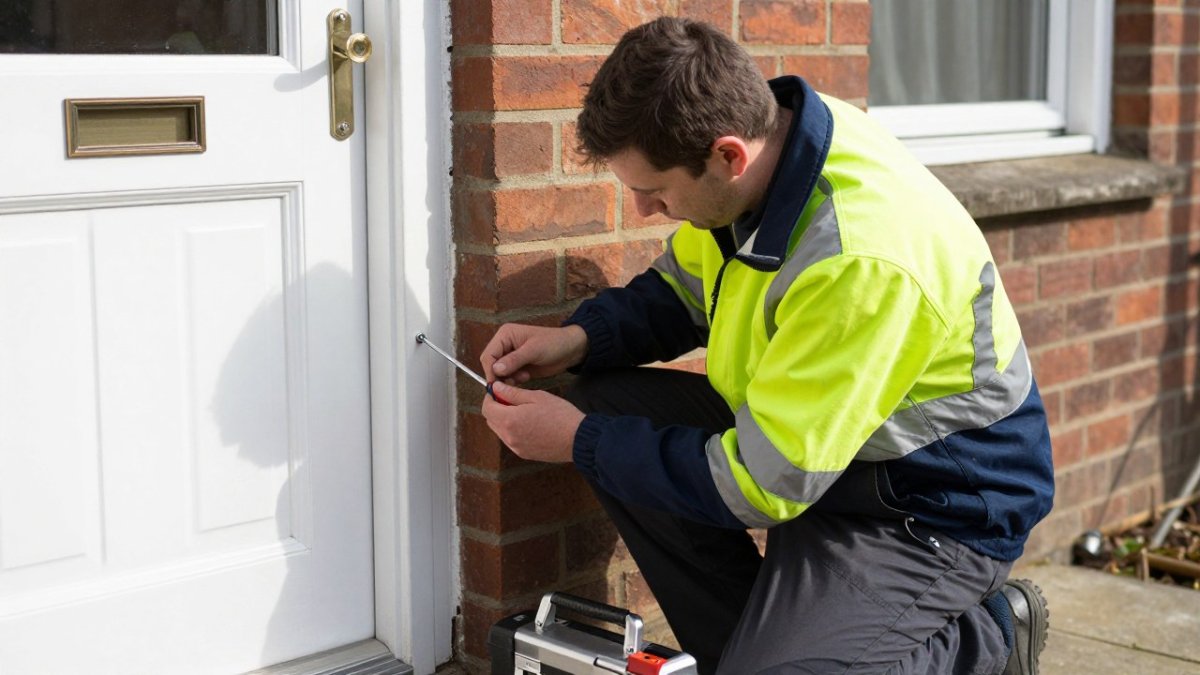
- Remove the existing cylinder. Undo the retaining screw, withdraw the cylinder and keep the old keys and cylinder together in a labelled bag. Record the removal on the schedule; the old cylinder may be needed if a tenant disputes the change.
- Check the door and lock case. Check the lock case for wear, the latch and deadbolt for smooth operation, and the door for swelling or damage. A new cylinder in a worn lock case will still jam, so replace a failing lock case now.
- Fit the new cylinder. Insert the cylinder, check it sits flush with the door furniture, and tighten the retaining screw gently. Overtightening distorts the cylinder and causes stiff operation. Fit any new escutcheons or handles at the same time.
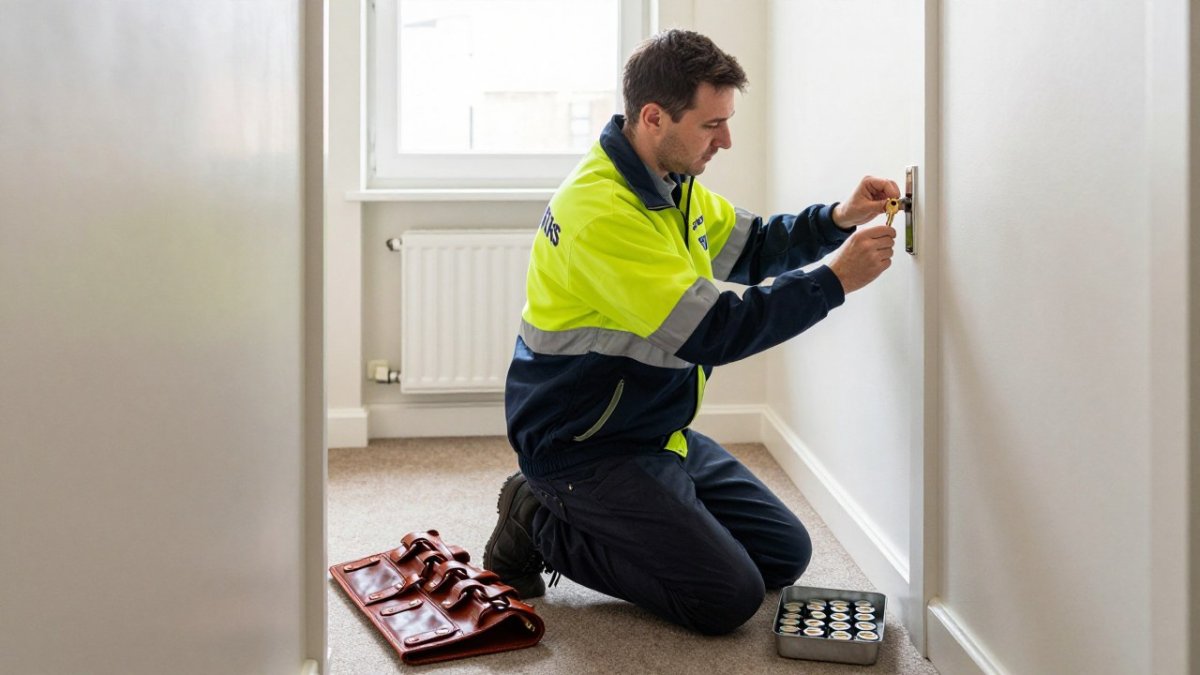
- Test with every key that should work. For each door, test the individual key, the relevant group key, the master key and the grand master key. Each key should turn smoothly and open only the doors it is meant to open. Test the latch and deadbolt separately, and test from both sides.
- Record the result. Note the flat or door reference, cylinder reference, key numbers issued and date. Update the key register at the same time, not at the end of the job.
- Hand over the tenant key. Give the tenant their individual key, explain that a master key exists and who holds it, and ask them to sign for the key. Leave a written note of who to contact if a key is lost.
- Move to the next flat. Repeat the steps. Do not leave a flat half-finished overnight, because a door without a working cylinder is a security and fire safety problem.
Watch out: test every key on every door before you hand over the set. A single wrong cylinder can leave a whole group of doors inaccessible, and the error is far easier to fix before keys are issued.
Testing and Handover
Testing is not just trying the master key in the front door. Walk the building with the door schedule and tick off each door against each key level, paying particular attention to doors between access levels, such as a shared stairwell door that a group key should open but an individual flat key should not.
At handover, provide the building owner or managing agent with:
- The completed door schedule showing which cylinder is fitted to which door.
- The key register listing every key issued, to whom and on what date.
- A small number of labelled spare keys held securely, not loose in a drawer.
Restricted Key Systems and Controlling Copies
Key control is what stops a master key system from becoming a security problem, and it is the area most guides skip. A restricted key system uses keys that cannot be copied at ordinary key cutting shops. Only authorised holders can obtain replacements, usually through the locksmith who holds the keying profile.
Restricted keys are commonly supplied with the following features, though availability depends on the system chosen:
- A registered key card or key number that identifies the building's keying profile.
- A key register kept by the locksmith, the managing agent or both.
- Written authorisation required before any copy is cut, signed by the person responsible for the building.
Running the Key Register
The register is the record that makes the system auditable. Keep it up to date and treat it as a live document, not a one-off list. For each key, record:
- The key number and the door or access level it belongs to.
- The name of the holder and their role.
- The date issued and the date returned.
When someone leaves, collect their keys before their last day and update the register the same day. A key returned a week later may already have been copied.
Lost Keys and Compromised Systems
A lost master key is a serious security issue because it opens every door at its level. The response depends on which key is lost and what it opens:
- Lost individual flat key: replace the cylinder for that flat and issue a new key. The rest of the system is unaffected.
- Lost group key: replace the cylinders on the doors that key opens, and consider whether the group key could have been copied before it was lost.
- Lost master or grand master key: treat the affected part of the hierarchy as compromised. In many cases the safe response is to rekey the cylinders the key opens and reissue keys to authorised holders. A restricted profile reduces the risk of copying, but it does not remove the risk of the key itself being used.
Plan the loss response before it happens. Agree in advance who authorises a rekey, who pays for it, and how tenants are told. A written procedure turns a panic into a routine job.
Watch out: a restricted key that is reported lost but later turns up should not simply go back into service. Treat it as compromised until the locksmith confirms whether the profile has been exposed.
When the Whole Hierarchy Needs Replacing
Sometimes a single rekey is not enough. If the keying schedule has been shared outside the authorised group, if the locksmith's records are incomplete, or if the building changes hands and the new owner cannot verify who holds keys, the safer course is to replace the hierarchy rather than patch it: new cylinders across the affected doors, a new keying profile and a fresh register.
For landlords with several rental properties, a consistent restricted key approach across buildings makes management easier and keeps each building's register separate.
Setting Up Master Key Access for Landlords and Managing Tenant Privacy
Landlords need master key access for repairs, safety checks and emergencies. Tenants need privacy in their own homes.
Put these points in writing:
- Entry notice: State how much notice the landlord gives before entering a flat for non-emergency work.
- Emergency access: Explain when the master key may be used without notice, such as a suspected gas leak or flood.
- Key holders: List who holds master keys and why.
Check the rules that apply to landlords and tenants in your area before you finalise these points.
Tell tenants about the system before it goes in. Explain that the master key exists, who holds it, and when it is used. Clear communication builds trust and avoids disputes later.
Booking a Professional Fit and Your Next Step With WS Locksmiths
A master key system for a block of flats involves planning, matched hardware, careful fitting and a key register.
Before you book, ask the fitter how they will plan the key hierarchy, handle fire doors, and keep the key register.
WS Locksmiths offers 24/7 availability, fast response times, and fully trained and vetted locksmiths for both residential and commercial properties. For a quote, or to talk through your block, contact WS Locksmiths on +44 77321 89721.
Get a master key system that works first time. Call WS Locksmiths on +44 77321 89721 to plan your block with a trained, vetted locksmith.
Frequently Asked Questions
How does a master key system work in a block of flats?
A master key system uses a layered hierarchy of keys. Each flat has its own change key that opens only that flat. A sub-master key opens a group of flats, such as one floor or one wing, and a grand master key opens every lock in the building. Communal doors, bin stores and plant rooms can be added at the appropriate level. Each cylinder is cut to match the keying chart, so the hierarchy has to be designed before any locks are ordered. Once fitted, a resident holds only the keys their access level requires, which limits exposure if a single key is lost.
Can existing locks be master keyed?
Sometimes. Many existing cylinders can be re-pinned to a new keying hierarchy, but this depends on the lock brand, the cylinder type and whether the lock is in good condition. Older or worn cylinders are often replaced rather than re-pinned because replacement gives a more reliable result and a clean key control record. A professional survey of the existing locks, doors and fire-door fittings will show which approach suits each door. Contact WS Locksmiths directly for a quote and to discuss your options.
Who should install a master key system?
A qualified, insured locksmith should install a master key system in a block of flats. The work involves cylinder replacement or repinning, precise keying to a schedule, and testing every door against the access plan. Errors are costly, since a single mis-cut cylinder can leave a flat unreachable or a common area unsecured. Ask any provider to show the keying chart and the key control procedure before work starts, and confirm that the locksmith will leave a documented system schematic with the building manager.
How do you prevent unauthorised keys from being copied?
Use restricted keyway profiles, which are sold only to authorised dealers and cannot be cut at ordinary key-cutting shops. Keep a key register that records every key issued, to whom, and when it was returned. Require signed authorisation before any duplicate is cut, and recover keys from departing tenants or staff. Where a key is lost, the affected cylinders should be re-keyed rather than relying on the key being found.