 how-to
Can You Rekey a Lock Without the Original Key?
Last Updated: 5 November 2026
Quick Summary
Yes, in most cases a locksmith can rekey a lock without the original key. Rekeying changes the internal pins so a new key works, while the lock body stays in place. It is usually cheaper than replacing the lock, though damaged or high-security cylinders may need replacing instead.
- A locksmith decodes the existing pin pattern using a pick and tension tool, without needing the old key.
- Rekeying keeps the same door hardware and is generally cheaper than a full lock replacement.
- Damaged, forced, bent or restricted high-security cylinders may need replacing rather than rekeying.
- DIY rekeying kits are available, but mistakes with pin heights and small parts are common.
- Compare total quotes, including callout fee, keys and VAT, rather than the advertised starting price.
Table of Contents
- Can a Locksmith Rekey a Lock Without the Original Key?
- How a Locksmith Rekeys a Lock Without a Key
- DIY Rekeying: Tools, Steps and Where It Goes Wrong
- Rekey or Replace Locks: How to Decide
- What Rekeying Costs in the UK
- How Long It Takes to Rekey a Lock
- Booking Your Rekey With WS Locksmiths
- Frequently Asked Questions
Can a Locksmith Rekey a Lock Without the Original Key?
Yes, in most cases a locksmith can rekey a lock without the original key. The process is slower than a simple key copy, but it gives you a lock that only works with a new key. If your key is broken or stuck in the lock, see how to remove it safely before any rekeying begins.
Rekeying means changing the internal pins inside the lock cylinder so they match a new key. The lock body stays in place. Only the inside mechanism changes.
Rekeying is the process of altering a lock's internal pin stacks so a new key operates it, without replacing the lock itself.
This matters most when a key is lost, a tenant has moved out, or you want to know who has access. A rekey is generally less costly than a full replacement and keeps the same door hardware.
Some locks cannot be rekeyed without the old key or specialist tools. Heavily worn, damaged or high-security cylinders may need replacing. Watch out: if a lock has been picked or forced, rekeying may not be enough, and the cylinder should be checked for damage first.
How a Locksmith Rekeys a Lock Without a Key
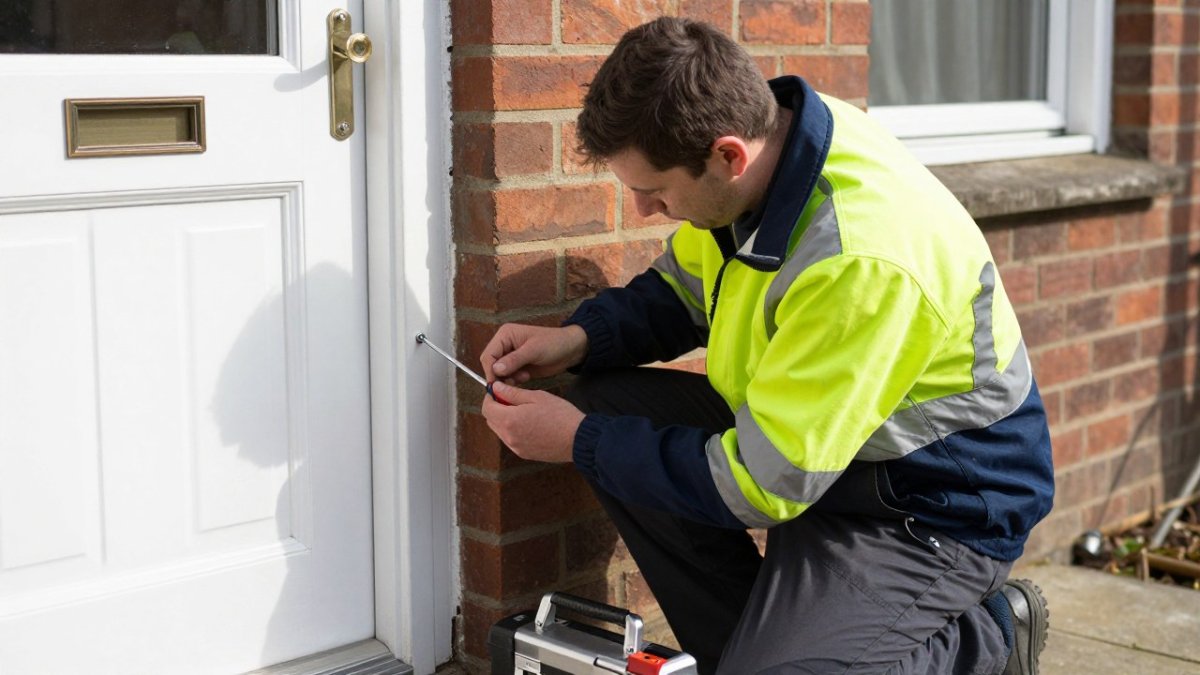
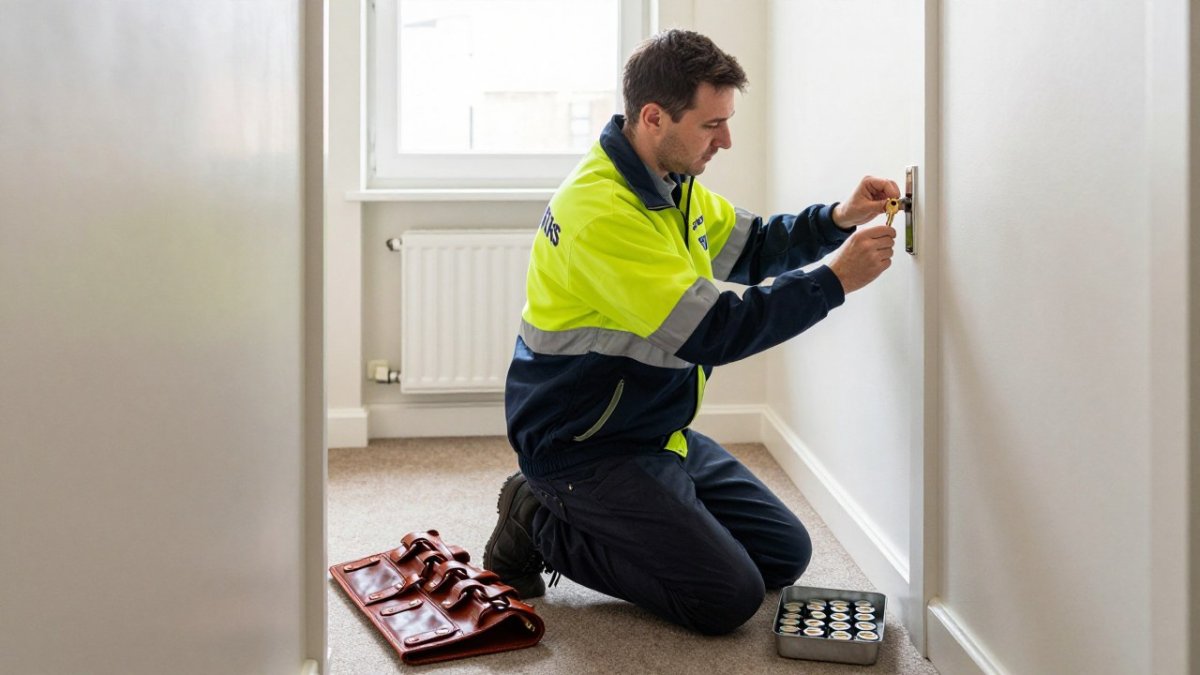
A locksmith starts by removing the cylinder from the door. They then read the existing pin configuration, reset the pins to match a new key, and reassemble the lock.
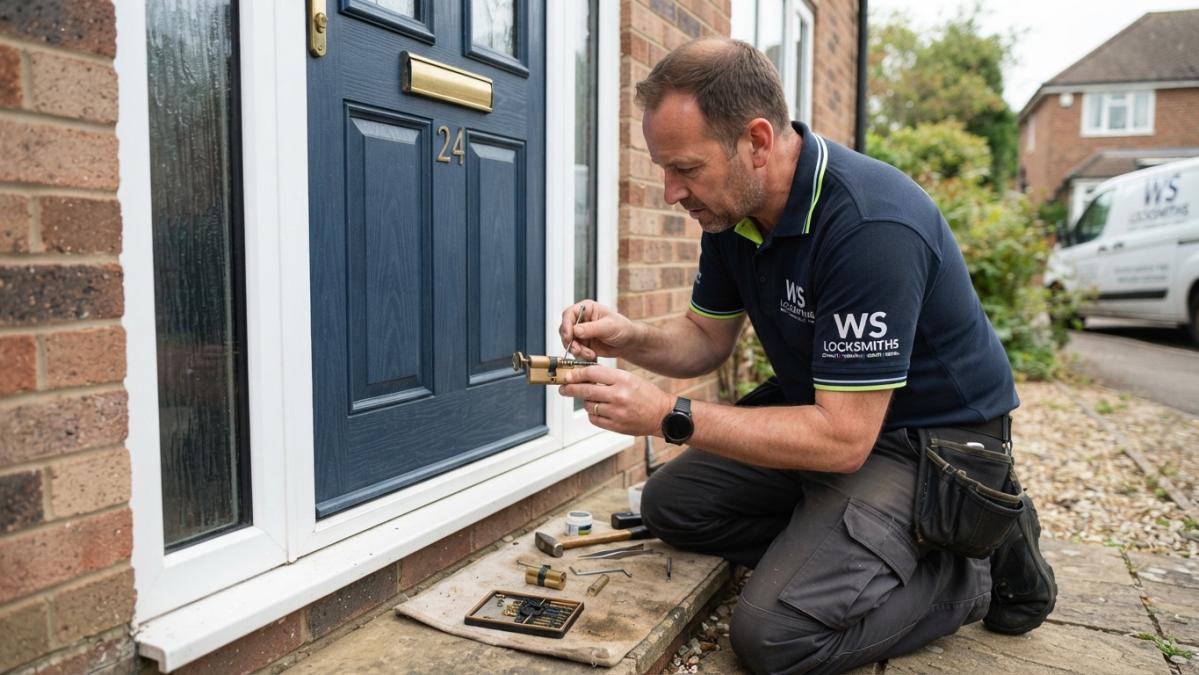
The work takes skill. Pin heights must be set exactly, or the new key will not turn smoothly.
!A UK locksmith in work clothes kneeling at a residential front door, carefully working a cylinder lock with small pick tools in good daylight
Decoding the Existing Pin Configuration
Before changing anything, the locksmith checks how the current lock is set up. This is called decoding. It tells them which pins need changing and how far.
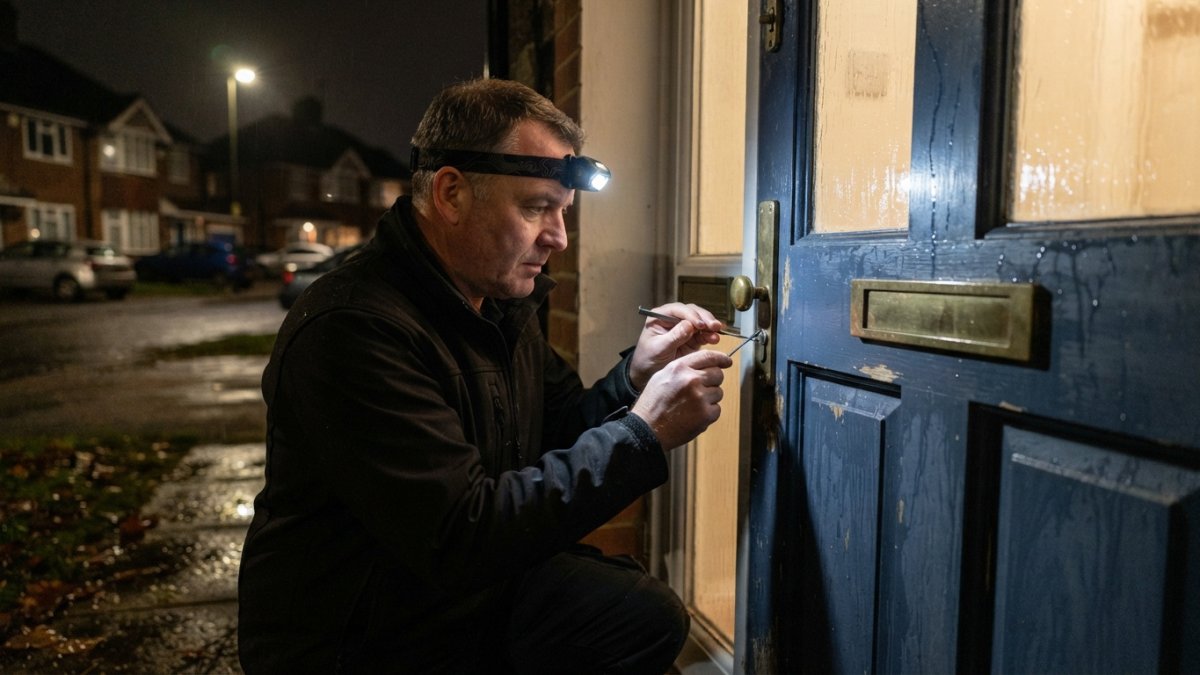
Decoding can be done without the original key by using a pick and tension tool. The locksmith feels for the binding pins one at a time and notes their heights. Experienced locksmiths often finish this step in a few minutes.
Some cylinders are harder to decode than others. Restricted or high-security profiles use extra pin types and anti-pick features. In those cases, the locksmith may recommend a replacement cylinder instead.
Removing the Lock Cylinder and Replacing the Pins
Once the pin heights are known, the cylinder is removed from the door. The locksmith then takes it apart carefully.
The steps usually look like this:
- Remove the retaining screw or clip at the back of the cylinder
- Slide out the plug using a plug follower
- Take out the old driver and key pins
- Fit new pins that match the new key's cuts
- Reassemble the plug and test the new key
Watch out: rushing the reassembly is a common cause of a stiff or sticking lock. Test the key several times before the job is finished.
DIY Rekeying: Tools, Steps and Where It Goes Wrong
Some people try to rekey a lock themselves using a rekeying kit. A basic kit includes a plug follower, tension tools and replacement pins. Kits are widely sold online.
The steps are similar to the professional process. The main difference is experience, since pin heights are easy to get wrong.
Common DIY mistakes include:
Call us 24/7: +44 77321 89721 →
- Mixing up the order of springs and pins
- Losing small parts during disassembly
- Forcing the plug, which can damage the cylinder
- Using the wrong pin size for the lock profile
If the lock is part of a security system, a DIY attempt can also void warranties or affect insurance. Check your policy first.
Rekey or Replace Locks: How to Decide
Rekeying is usually the cheaper and less disruptive option, but it is not always the right one. To compare which lock types actually offer better security, review the options before you commit. The decision should turn on the condition of the lock, the type of hardware fitted, and what you need the lock to do.
Start with the lock type
Most British homes have one of three arrangements, and each behaves differently when a key is missing.
- Euro cylinder locks. These are the most common cylinder in modern UK doors. A standard euro cylinder can often be rekeyed or replaced with a new cylinder of the same profile. Replacement is usually straightforward because euro cylinders are a standard shape, though sizes vary and must be measured accurately.
- Multipoint locking systems. Found on many uPVC and composite doors, these use a central euro cylinder that drives hooks, rollers and deadbolts around the door edge. The cylinder itself can often be rekeyed or replaced, but the surrounding mechanism is not a pin-tumbler lock and should not be dismantled by a DIYer. If the door has dropped or the mechanism is stiff, rekeying alone will not fix it.
- Traditional mortice and rim locks. Older mortice locks may use levers rather than pins. Some can be rekeyed by a locksmith, but lever locks are a different discipline from pin-tumbler work and are less suited to DIY kits. Very old or worn mortice locks are often better replaced.
Consider rekeying when
- The lock operates smoothly and the cylinder shows no sign of damage
- You want to keep the existing door hardware and furniture
- The cylinder is a standard profile that a locksmith can decode and re-pin
- You only need to change who holds a working key
- The lock is part of a matched set and you want to keep the appearance consistent
Consider replacing when
- The cylinder is damaged, bent, loose or has been forced
- The lock has been picked or bypassed and you cannot be sure of its internal condition
- The lock is a low-security type that is easy to snap or bump
- The cylinder is a restricted or high-security profile that cannot be decoded without the original key or the manufacturer's authorisation
- The door hardware is old, mismatched or no longer operates smoothly
- You want to upgrade to a cylinder with a British Kitemark or a Sold Secure rating
A simple decision path
- Confirm you own the property or are authorised to change the lock. If you rent, speak to the landlord or letting agent first.
- Check the lock type. A euro cylinder is the easiest to rekey or replace; multipoint and mortice systems need a locksmith's assessment.
- Test the lock. If it turns smoothly and the key does not stick, rekeying is likely to be enough. If it catches, grinds or feels loose, replacement is the safer choice.
- Check for damage. Any sign of forcing, a bent cylinder or a loose surround points to replacement.
- Decide on security. If the lock is a basic cylinder with no anti-snap or anti-bump features, replacing it with a rated cylinder is often better value than rekeying an inferior lock.
Watch out: a rekeyed lock is only as good as the cylinder it is built into. You can check whether your existing lock is anti-snap to help decide between rekeying and replacement. If the cylinder is worn or low-security, rekeying can give a false sense of security.
If you are unsure, ask a locksmith to inspect the lock and explain both options in plain terms. A reputable locksmith will tell you when replacement is unnecessary as well as when it is the better choice.
What Rekeying Costs in the UK
Rekeying is generally cheaper than replacing a lock, but the price depends on several factors.
Typical price ranges
- Rekeying a single standard euro cylinder: pricing depends on the provider, the area and the job involved.
- Rekeying several locks at one property: pricing depends on the number of locks.
- Replacement cylinder supplied and fitted: pricing depends on the cylinder's security rating and the job.
- Emergency or out-of-hours callout: ask what the callout fee is before agreeing to the job.
- High-security or restricted cylinders: pricing depends on the cylinder and whether it can be rekeyed.
What affects the price
- The number of locks being rekeyed
- The lock type, since multipoint and mortice systems take longer than a standard euro cylinder
- The time of day and whether the job is an emergency
- Travel and callout charges, which vary by provider and distance
- Whether new keys are included or charged separately
- Whether the cylinder needs replacing rather than rekeying
What to ask before booking
- Is the quote fixed or an estimate?
- Does it include the callout fee, labour, pins and new keys?
- Is VAT included?
- What happens if the lock cannot be rekeyed and needs replacing?
- Are there any charges for a failed attempt or a no-access visit?
A clear quote should break down labour, parts and any callout charge. If a provider will not give a breakdown before attending, treat that as a warning sign.
Watch out: unusually low headline prices sometimes exclude the callout fee, keys or VAT, so compare the total cost rather than the advertised starting figure.
Costs vary between jobs. For a current quote in GBP, contact WS Locksmiths directly and we will explain what affects the price for your property.
How Long It Takes to Rekey a Lock
A single cylinder rekey often takes between 20 and 45 minutes for a skilled locksmith. Multiple locks take longer, and high-security cylinders may need more time.
The total time depends on:
- How many locks need rekeying
- Whether the lock is easy to remove
- How the existing pins are set
- Whether the new key needs fine adjustment
DIY attempts usually take much longer, especially for first-timers.
Booking Your Rekey With WS Locksmiths
If you need a lock rekeyed without the original key, WS Locksmiths can help. We offer 24/7 emergency locksmith services across Crawley, Horsham, Horley and Redhill. Our locksmiths are fully trained and vetted, and we work on both residential and commercial properties.
For a quick response, call us 24/7 on +44 77321 89721.
Frequently Asked Questions
Can a locksmith rekey a lock without the original key?
Yes. A locksmith can rekey most standard pin tumbler cylinders without the original key. They remove the cylinder, decode the existing pin configuration using specialist tools, then replace the pins so that a new key fits. Cylinders that are damaged, worn or of certain high-security designs may need replacing instead, so a site visit is the best way to confirm what is possible for your specific lock.
Can you rekey a door lock yourself if you have no key?
You can attempt it with a rekeying kit, but it is not always straightforward. You need to remove the cylinder, decode the pins without damaging them, and reassemble the lock accurately. Mistakes can leave the lock jammed or insecure. For most homeowners, calling a locksmith is quicker and avoids damage to the lock or door.
Is it cheaper to rekey a lock or replace it?
Rekeying is usually cheaper than replacing a lock, especially when the cylinder is in good condition and the lock hardware is sound. Replacement makes more sense when the lock is worn, damaged or outdated. Pricing depends on the lock type, the number of locks and the time of the visit. Contact WS Locksmiths for a quote tailored to your property.
Can all types of locks be rekeyed?
Most cylinder locks can be rekeyed, but not every lock can. Some high-security and anti-snap designs have restrictions, and some older or damaged locks cannot be reliably rekeyed. A locksmith can check the lock model and condition on site and tell you whether rekeying, replacement or an upgrade is the better option.