 blog
blog
Emergency Locks for Doors: 7 Types That Actually Work
Table of Contents
- Emergency Locks for Doors: A Quick Breakdown
- Anti-Snap Cylinders and High-Security Euro Locks
- Key Safes and Temporary Locks for Immediate Peace of Mind
- Emergency Exit Door Regulations and What They Mean for Lock Choice
- Panic Hardware Installation: When Push Bars Are the Right Call
- Lockout Emergency Services: What to Expect When You Call
- Which Emergency Lock Suits Your Property?
- Frequently Asked Questions
Last Updated: September 14, 2026
Emergency Locks for Doors: A Quick Breakdown
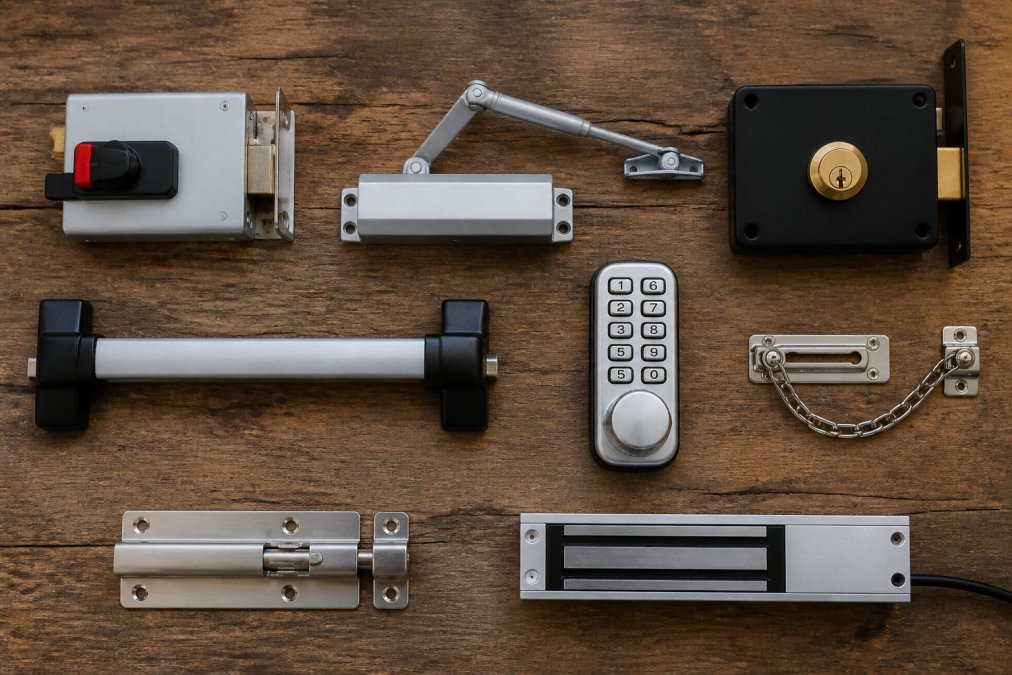
Emergency locks are replacement or temporary locking devices fitted when a lock fails, a key is lost, or a property needs immediate security. At WS Locksmiths, we handle these callouts daily, and the right choice depends on three things: the door type, the threat level, and how fast you need protection. This guide covers various options, so you can match the lock to the situation rather than guessing under pressure.
If you are locked out right now, skip ahead to the section on lockout emergency services. If you are planning ahead, read on.
| Lock Type | Best For | Typical Fix Time | Security Level |
|---|---|---|---|
| Anti-snap cylinder | uPVC front doors | 20-30 mins | High |
| Key safe | Rental and carer access | 15 mins | Medium |
| Temporary padlock | Immediate securing after break-in | 10 mins | Low |
| Panic hardware | Commercial fire exits | 1-2 hours | High |
| Mortice deadlock | Timber doors | 45 mins | High |
Anti-Snap Cylinders and High-Security Euro Locks
Anti-snap cylinders are the single most important upgrade for any uPVC or composite door. They resist the snapping technique burglars use to break a euro cylinder in seconds, exposing the lock mechanism underneath.
Euro cylinders sit at the centre of most modern doors, and standard versions are vulnerable. An anti-snap cylinder has a sacrificial section that breaks away cleanly without exposing the operating mechanism. Look for a three-star rating under the British Standard Kitemark scheme for locks and hardware, which tests resistance to drilling, picking, and snapping.
The pros are clear: strong protection and no change to how the door looks. The downside is that a cheap anti-snap cylinder still fails. Fit a reputable three-star model and have it installed by someone who knows the door.
Key Safes and Temporary Locks for Immediate Peace of Mind
A key safe is a small combination-protected box bolted to an exterior wall, holding a spare key for carers, contractors, or family. For rental properties and homes with regular visitors, it removes the need to hand out keys.
The trade-off is security. A cheap key safe can be prised off a wall, so fit a police-approved model with a tested locking mechanism. Mount it out of sight from the street and change the code whenever a contractor's access ends.
Temporary locks solve a different problem: a door that cannot be secured tonight. A heavy-duty padlock and hasp, or a temporary mortice lock, buys you time until a permanent repair. These are not long-term solutions, but they prevent an unsecured property from being an open invitation.
Emergency Exit Door Regulations and What They Mean for Lock Choice
Emergency exit door regulations exist to ensure people can leave a building quickly and without a key during a fire or other emergency. In the UK, fire safety duties for most premises sit with the responsible person under the Regulatory Reform (Fire Safety) Order 2005, and guidance is published by the government (gov.uk).
The practical effect on lock choice is simple. An emergency exit door must open without a key, card, or code from the inside. That rules out standard deadlocks on exit routes. It also means any locking hardware must release with a single action, which is where panic hardware comes in.
Get this wrong and you create a serious safety and legal problem. A door that needs a key to escape is not an emergency exit, whatever the sign says. Check the current guidance through the UK government fire safety guidance for businesses before specifying hardware on any exit route.
Panic Hardware Installation: When Push Bars Are the Right Call
Panic hardware installation is required on exit doors where a large number of people may need to leave quickly, and it is the correct choice whenever a door serves as a designated escape route.
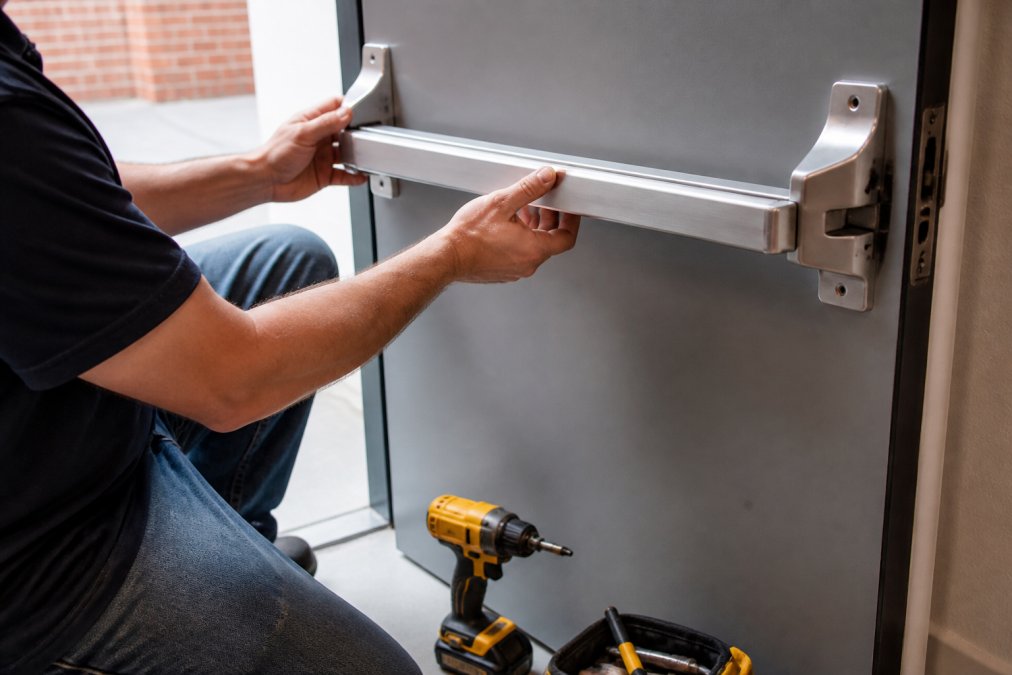
A push bar, or panic bar, releases the door with body pressure alone. No handle to turn, no key, no fumbling in smoke or darkness. For shops, offices, schools, and any premises with public access, this is the standard.
Call us 24/7: +44 77321 89721 →
The pros: fast escape, clear legal compliance, and durability under heavy use. The cons: it must be fitted correctly or the door will not latch securely when closed. A misaligned push bar is a security gap as much as a safety one.
For most commercial premises, this is not optional. It is the baseline.
Lockout Emergency Services: What to Expect When You Call
Lockout emergency services provide rapid access when you are shut out of your home or business, and the priority is getting you back in without damaging the door or lock.
A reputable provider will confirm your identity and your right to access before doing anything. They will attempt non-destructive entry first, using picks and specialist tools, and only drill the lock as a last resort. If a lock must be replaced, they should explain why and show you the options.
What most people miss is that speed and care are not opposites. A rushed, untrained job often means a damaged door and a bigger bill. Ask whether the locksmith is vetted and whether they carry the parts to replace a failed lock on the spot.
Which Emergency Lock Suits Your Property?
Match the lock to the door and the risk. For a uPVC front door, an anti-snap cylinder is the priority. For a rental with regular access needs, a key safe plus a quality cylinder covers both convenience and security. For commercial exit routes, panic hardware is the only compliant answer.
Here is a quick decision framework:
- Locked out, no damage: call for non-destructive entry first.
- After a break-in: secure with a temporary lock, then upgrade the cylinder.
- Rental property: key safe for access, three-star cylinder for security.
- Commercial exit: panic hardware, checked against fire safety guidance.
- Timber door: a five-lever mortice deadlock remains a solid choice.
The mistake is treating every situation the same. A temporary padlock is fine for one night and wrong for six months. An anti-snap cylinder is essential on a uPVC door and pointless on a fire exit that needs a push bar.
A lockout or a break-in leaves you exposed, and the wrong fix leaves you exposed again. WS Locksmiths provides 24/7 emergency locksmith services across the local area, with fully trained and vetted locksmiths who arrive quickly and explain your options honestly. We handle everything from emergency lockout assistance to anti-snap cylinder upgrades and commercial panic hardware, and we are available on weekends and holidays when you need us most. Call us 24/7 on +44 77321 89721 to secure your property today.
Frequently Asked Questions
What is a panic bar door lock?
A panic bar door lock is a horizontal bar fitted across a door that releases the latch when pushed from the inside. It is designed so anyone can exit quickly without a key, which is why it is common on commercial fire exits. Panic hardware installation must comply with fire safety rules, so it is best fitted by a qualified locksmith who can confirm the door still meets the required standards.
Are there temporary locks for home security during an emergency?
Yes. Temporary options include key safes, portable door locks that wedge against the frame, and replacement cylinders fitted the same day. If a break-in has left your door insecure, a locksmith can fit a temporary lock or a full high-security cylinder within hours. These measures keep the property secure until a permanent solution is installed.
What are the legal requirements for fire exit door locks?
Fire exit doors must open easily from the inside without a key, and emergency exit door regulations require that occupants can escape without special knowledge or effort. Locks that trap people inside are not permitted on escape routes. A locksmith can advise on compliant hardware for your building type.
What is the difference between a fire exit lock and a security lock?
A fire exit lock prioritises fast escape and usually allows free exit at all times. A security lock prioritises preventing unauthorised entry. Many buildings need both, which is why panic hardware with external key access is common. The right combination depends on the door's location and its role in your escape plan.