 how-to
7 Steps to Remove a Broken Key from a Lock Safely
Quick Summary
To remove a broken key from a lock safely, first make sure the door is secure and the keyway is aligned. If the broken piece sticks out, lubricate lightly, grip it with needle-nose pliers and pull it straight out without twisting. Never push the fragment deeper or use adhesive. If it is flush with the keyway, call a locksmith.
- Check the amount of key you can see before choosing a method.
- Use only a small amount of graphite powder, not oil-based spray.
- Grip the exposed end with needle-nose pliers and pull straight out.
- Never push the fragment deeper or apply superglue to a tool.
- Stop and call a locksmith if the fragment is flush or the lock is high-security.
Table of Contents
- Why Keys Snap in Locks and What to Check First
- Broken Key Stuck in Lock: What to Do Before You Touch It
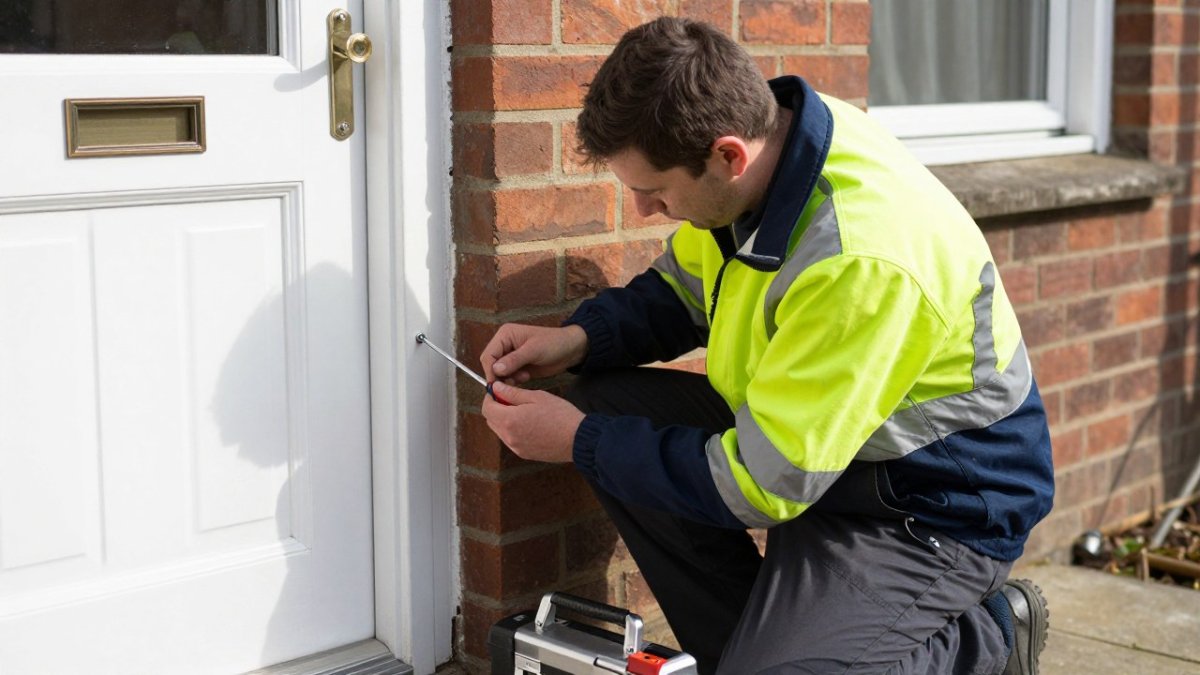
- Step-by-Step: Removing an Exposed Key Fragment
- Broken Key Extractor Tool: When It Works and When It Doesn't
- Key Stuck in Lock: How to Get It Out Without Damaging the Cylinder
- Cost to Remove a Broken Key from a Lock and When to Call a Locksmith
- Booking Your Emergency Visit with WS Locksmiths
- Frequently Asked Questions
Last Updated: November 1, 2026
Finding a broken key stuck in your lock is stressful, especially when the door is shut and you need to get inside. Done carefully, you can sometimes remove a broken key from a lock safely without calling anyone out.
A key fragment is simply a piece of a key that has snapped off inside the keyway. Most of the time, the part sticking out can be gripped and turned out with the right approach. The trick is working slowly and never forcing the key.
Why Keys Snap in Locks and What to Check First
Keys usually break because of wear, bending, or forcing a key that does not turn smoothly. Old keys with worn cuts are especially prone to snapping. Keys that are forced into a lock at an angle can also fail. To see whether your lock resists this, check how to tell if your lock is anti-snap.
Before you touch anything, take a moment to look at the lock. Note whether the lock is turning freely, whether the key is sitting straight, and whether any part of the key is visible.
Assessing How Much of the Key Is Exposed
The amount of key you can see decides your next move. Use this quick guide:
- Fully exposed: You can grip the end with pliers. Go to the removal steps.
- Partly exposed: A small tip shows above the keyway. Careful gripping may work.
- Flush with the keyway: Nothing to grip. Stop and call a locksmith.
Broken Key Stuck in Lock: What to Do Before You Touch It
Before you reach for a tool, pause and make the situation safe. Most damage to locks happens in the first minute of panic, not during the careful extraction itself.
Safety precautions to take first
- Secure the door. If the door is shut and locked, do not leave it standing open while you work.
- Protect your hands and eyes. A snapped key often has a sharp, jagged edge. Wear thin gloves if you have them, and keep your face back from the keyway in case a fragment springs out.
- Work in good light. Use a torch or phone light at an angle so you can see how much of the fragment is exposed and whether the cylinder is straight.
- Check the cylinder position. The keyway should be upright and aligned. If the cylinder has rotated, the fragment may be trapped against the pins and pulling will only jam it further.
- Have your spare key ready. If you do not have one, stop and treat this as a lockout rather than a DIY job.
Methods to avoid
Some advice circulating online does more harm than good. Avoid all of the following:
- Superglue or adhesive on the end of a tool. It can bond the fragment to the cylinder, block the keyway and turn a simple extraction into a full cylinder replacement.
- Forcing tools such as screwdrivers, knives or thick wire. These bend pins, scratch the keyway and can push the fragment deeper.
- Pushing the fragment inwards to 'free' it. Once a piece is past the pins it is much harder to reach and may require dismantling the lock.
- Oil-based sprays in large amounts. A light lubricant is fine, but heavy oil attracts grit and makes future sticking more likely.
- Repeated twisting. Twisting a gripped fragment can snap it again or damage the cylinder cam.
If your home is secure and the door is locked, call the emergency lock-open number: Call WS Locksmiths 24/7 on +44 77321 89721. Trying to pull the key out yourself can turn a small job into a lock replacement, so act carefully from the start. You can also see our emergency lock-open number guide for what to do while you wait.
Step-by-Step: Removing an Exposed Key Fragment
Follow these steps in order. Work slowly.
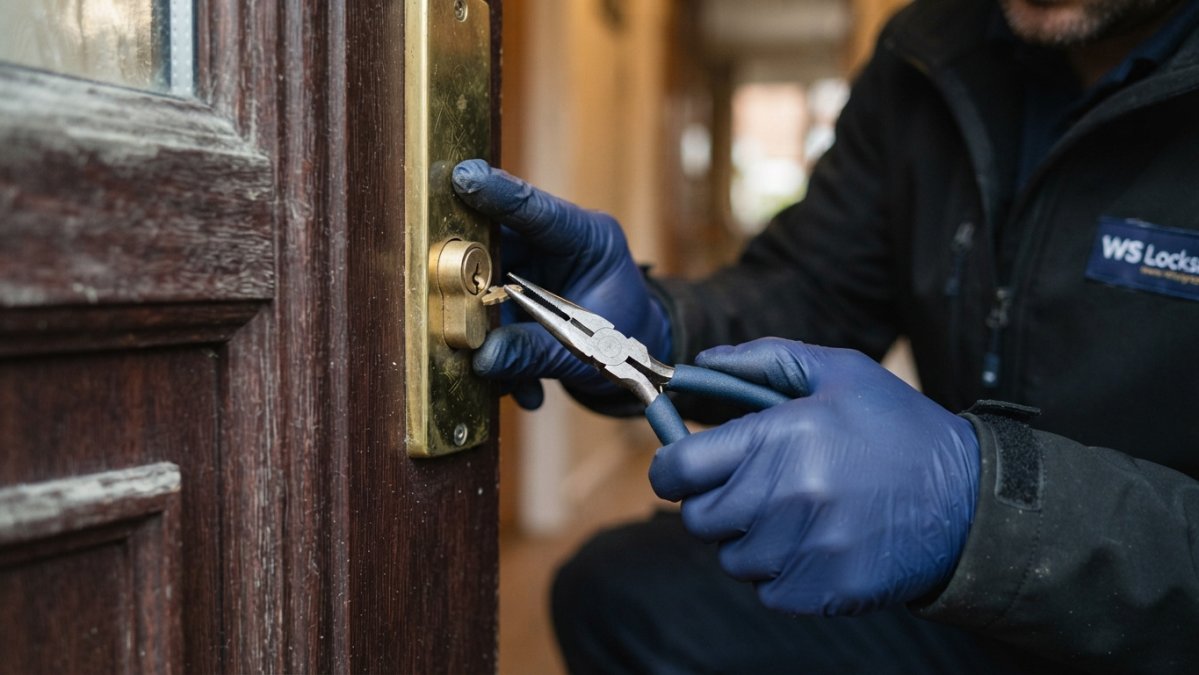
- Check the lock is in the correct position for removal.
- Spray a small amount of graphite powder or lubricant into the keyway.
- Wait a minute so the lubricant settles.
- Grip the exposed end of the key with needle-nose pliers.
- Turn the cylinder gently to align the fragment.
- Pull the broken key straight out. Do not twist sharply.
- Test the lock with your spare key.
Watch out: Never push the fragment deeper. Stop if it will not move.
Lubricating the Keyway and Using Pliers or Tweezers
A light coat of graphite powder helps the fragment slide out. Avoid oil-based sprays, since they can attract dust and make the lock stickier over time.
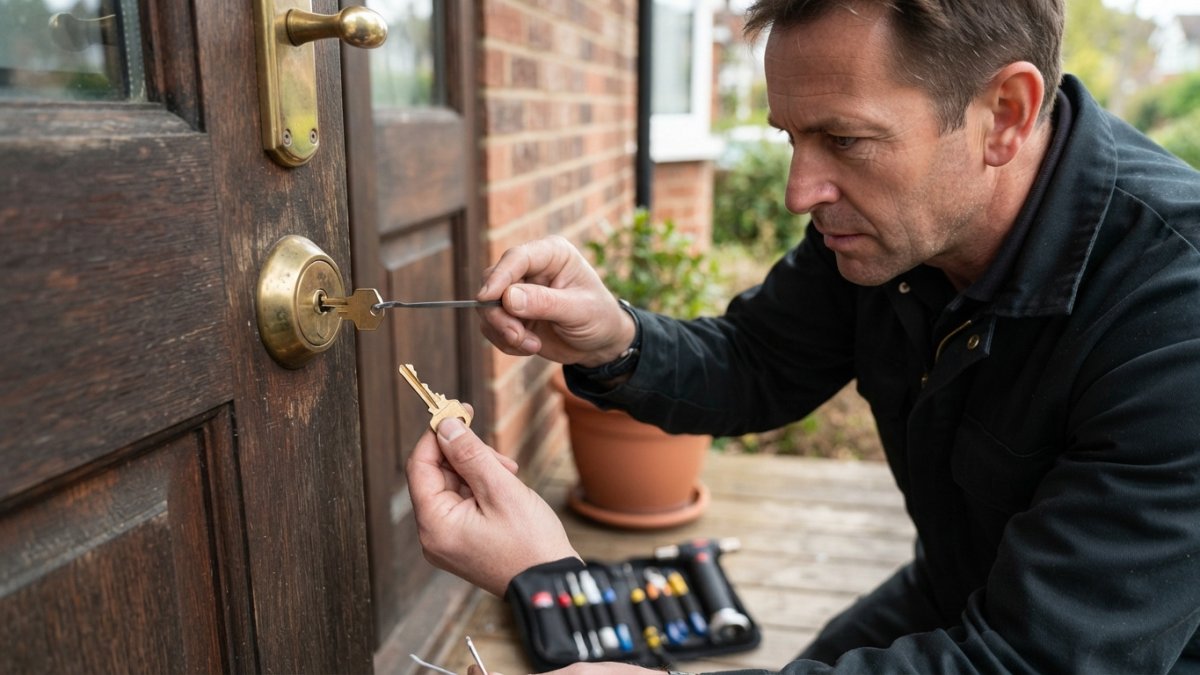
Use needle-nose pliers for a fragment that sticks out. Tweezers work for very small pieces. Grip gently and pull straight out. If the fragment slips, stop and reassess.
The steps below set out the removal process in order, with the timing and the key points to watch for at each stage.
| Step | What to do | Key point |
|---|---|---|
| 1. Position | Check the lock is in the correct position for removal | Confirm before starting |
| 2. Lubricate | Spray a small amount of graphite powder or lubricant | Small amount only |
| 3. Settle | Wait a minute for the lubricant to settle | One minute |
| 4. Grip | Grip the exposed end with needle-nose pliers | Grip gently |
| 5. Align | Turn the cylinder gently to align the fragment | Turn gently |
| 6. Remove | Pull the broken key straight out | Do not twist sharply |
| 7. Test | Test the lock with your spare key | Confirm the lock works |
Broken Key Extractor Tool: When It Works and When It Doesn't
A broken-key extractor is a thin, barbed or hooked tool designed to reach into the keyway and grip a fragment that is too small for pliers. It is the right tool for some jobs and the wrong tool for others, and choosing correctly is what separates a five-minute fix from a lock replacement.
Call us 24/7: +44 77321 89721 →
Choose your method by fragment position
Use this decision guide before you pick up any tool:
- Fragment protrudes clearly (roughly 5 mm or more): needle-nose pliers or tweezers are usually enough. Grip, align the cylinder and pull straight out.
- Fragment is partly exposed but short: a barbed extractor can hook the end. Insert it alongside the fragment, rotate gently to catch the barb, and pull straight back.
- Fragment is flush with the keyway: an extractor may still work if the piece is not cracked, but this is the point where many DIY attempts fail. If two or three careful tries do not grip, stop.
- Fragment is deep inside the cylinder: extractors rarely reach safely. Pushing further risks driving the piece into the pins. This is a professional job.
- Fragment is cracked or split across the keyway: the barbs have nothing solid to hold and can break the piece further. Stop and call a locksmith.
Which locks this advice applies to
The same principles apply to most pin-tumbler cylinders found on residential doors, but the risks differ:
- House doors (uPVC and composite): the cylinder is usually removable by a locksmith, which makes a deep fragment recoverable without damaging the door.
- Padlocks: often easier to work on because the lock can be held steady, but small padlock keyways limit tool access.
- Vehicle locks: do not use extractors or thin blades here. Vehicle lock cylinders are easily damaged and replacement is costly; use a specialist auto locksmith.
- High-security cylinders: these often have restricted keyways and hardened pins. DIY extraction is more likely to cause damage, so treat them as a stop condition.
When to stop and call a locksmith
Stop using an extractor if:
- the tool will not grip after two or three careful attempts;
- the fragment moves deeper rather than outward;
- you can feel or hear the pins catching;
- the cylinder was already stiff, damaged or misaligned before the key snapped;
- the lock is a high-security or insurance-approved cylinder.
A qualified locksmith can assess the fragment and advise on the best approach for your lock.
Key Stuck in Lock: How to Get It Out Without Damaging the Cylinder
A key stuck in the lock is often a different problem from a snapped fragment. The key may be jammed by worn pins or misalignment. Forcing it can bend the key further or damage the cylinder. If the cylinder does need replacing, learn how a Euro cylinder lock is changed.
Try lubricating the keyway, then gently wiggle the key while turning it slightly. Pull straight out when it moves. If the cylinder turns freely but the key does not come out, the cylinder may need professional attention.
Cost to Remove a Broken Key from a Lock and When to Call a Locksmith
Call a professional if the fragment is flush, deep in the lock, or if DIY attempts have not worked. Professional removal costs depend on the lock type, the time of day, and whether the cylinder needs replacing, so call for a quote. Visit the WS Locksmiths website or call us for current prices before any work starts.
Call a locksmith if you are locked out and cannot get in safely, if the lock has been damaged, or if you are unsure what to do. Fast help can save a lot of hassle.
Booking Your Emergency Visit with WS Locksmiths
WS Locksmiths provides 24/7 emergency locksmith services across Crawley, Horsham, Horley, and Redhill. Our fully trained and vetted locksmiths handle lockouts and lock repairs for homes and businesses. We offer fast response times, including weekends and bank holidays.
Call us 24/7 on +44 77321 89721 and we will get you back inside as quickly and carefully as possible.
Frequently Asked Questions
How do I take a broken key out of a lock?
If part of the key is still visible, lubricate the keyway with graphite powder or a dry lubricant, then grip the exposed end with needle-nose pliers or tweezers and pull it straight out slowly. Avoid twisting or forcing it, as this can snap the fragment further inside. If the fragment sits flush with the cylinder or you cannot get a clean grip, stop and call a professional locksmith rather than pushing it deeper with a thin tool.
Can a magnet pull a broken key out of a lock?
Sometimes, but it rarely works on modern keys. Most house keys are brass or nickel-silver, which magnets do not attract, and steel keys may be too deep for a magnet to reach through the keyway. A magnet can also drag metal shavings into the pins. Treat it as a low-odds trial only if the fragment is steel and clearly exposed, and never use it as a substitute for proper extraction.
What tools can remove a broken key from a lock?
Common options include needle-nose pliers, tweezers, a thin blade or paper clip for hooking a fragment, graphite lubricant, and a purpose-made broken-key extractor. Extractors have tiny barbs designed to grip the internal shoulders of the key. Choose the tool that matches how much of the fragment you can reach, and avoid improvised tools that could bend or jam the pins.
When should I call a locksmith to remove a broken key from a lock?
Call a locksmith if the fragment is flush with the cylinder, if the lock will not turn or feels jammed, if you have already tried lubricating and pulling without success, or if the door is a high-security or anti-snap lock. Continued attempts can damage the pins and cylinder, which may mean replacing the whole lock. A professional can usually extract the fragment and assess whether the lock still works safely.