 how-to
How to Tell If Your Lock Is Anti-Snap
Table of Contents
- What Makes a Lock Anti-Snap and Why It Matters
- Understanding Anti-Snap Lock Markings
- Recognising a TS007 3 Star Lock
- How to Measure a Euro Cylinder Correctly
- Visual Inspection: What to Look For on Your Lock
- Euro Cylinder Lock Replacement: When and Why
- Common Mistakes to Avoid When Checking Your Lock
- Frequently Asked Questions
Last Updated: October 7, 2026
What Makes a Lock Anti-Snap and Why It Matters
An anti-snap lock is a security device designed to resist the "snapping" attack, where a burglar breaks the cylinder at its weakest point and removes it entirely. This vulnerability affects standard euro cylinders, which can snap under force, leaving your door unsecured in seconds.
Understanding whether your lock has anti-snap protection matters because it directly impacts your home's security. A standard euro cylinder can fail catastrophically. An anti-snap lock prevents this by reinforcing the cylinder's internal structure or adding a secondary locking mechanism that holds even if the visible part breaks.
The damage is swift and silent. Your lock can fail in under a minute without proper anti-snap features.
Why does this matter now? Insurance companies increasingly require anti-snap locks for coverage on residential properties. If your cylinder snaps and you haven't upgraded, your claim may be denied. Beyond insurance, anti-snap locks simply give you peace of mind that a common attack method won't work against your home.
The good news: checking whether your lock has anti-snap protection is straightforward. You don't need a locksmith to inspect it. This guide shows you exactly what to look for, how to measure your cylinder, and when replacement becomes essential.
Understanding Anti-Snap Lock Markings
The easiest way to identify an anti-snap lock is to look for specific markings on the cylinder itself. Manufacturers stamp these marks to show the lock meets security standards.
The most important marking to find is TS007. This British Standard indicates the lock has been tested and certified for anti-snap resistance. You'll see this printed on the cylinder, usually near the keyway or on the outer edge.
Look for a star rating alongside the TS007 marking. A 3-star rating is the highest anti-snap certification available. It means the cylinder has passed rigorous snap-resistance testing. One-star and two-star ratings offer some protection but are weaker than the three-star standard.
Other markings to watch for include:
- Kitemark symbol - Shows the lock was tested by an accredited body
- BS EN 1303 - The European standard for cylinder security
- Manufacturer branding - Reputable makers clearly display their certification
If you see none of these markings, your lock likely lacks anti-snap protection. Many older cylinders have no markings at all, which is a clear sign they need upgrading.
The markings are small and sometimes hard to spot. You may need a torch and a closer look. Check the front face of the cylinder first, then the sides. If you still can't find them, assume the lock doesn't meet current anti-snap standards.
Recognising a TS007 3 Star Lock
A TS007 3 star lock is the gold standard for residential security. This certification means the cylinder has survived the most demanding anti-snap tests. Insurance companies often require this level of protection.
The 3-star rating indicates the lock can withstand:
- Heavy force applied to the cylinder body
- Repeated snapping attempts
- Pressure at multiple angles
When you spot a TS007 3 star marking, you know the manufacturer has invested in proper anti-snap engineering. This isn't a marketing claim; it's a tested, verified standard.
You'll find the TS007 3 star marking printed directly on the cylinder. It's usually in small text near the keyway or on the outer rim. Some cylinders have the marking stamped into the metal. Others have it printed on a label. Either way, the marking must be clearly visible.
Not all TS007 cylinders are 3-star. Some are 1-star or 2-star. The star count matters. A 1-star cylinder offers basic snap resistance. A 2-star cylinder is better. But only a 3-star cylinder gives you maximum protection against this attack method.
If you can't find any TS007 marking at all, your lock doesn't meet this standard. This is especially common in properties built before 2010. Older locks were never designed with anti-snap protection in mind.
The simplest check: find the TS007 marking, count the stars next to it, and confirm you have three. If it says 1-star or 2-star, consider upgrading to a 3-star cylinder for better security.
How to Measure a Euro Cylinder Correctly
Measuring your euro cylinder is essential before you buy a replacement. A cylinder that's too short or too long won't work properly in your door.
Here's how to measure correctly:
Start by opening your door fully. Look at the edge where the lock cylinder sits in the door frame. You'll see the cylinder protruding from both sides of the door.
Measure from the outer edge of the cylinder on one side to the outer edge on the other side. This is your total cylinder length. Use a tape measure or ruler. Write down the measurement in millimetres.
Next, measure from the centre of the keyway to the outer edge of the cylinder. This is called the "grab length" or "projection." It tells you how far the cylinder sticks out from the door. This measurement is equally important.
A standard euro cylinder is usually 30mm + 30mm (60mm total), but sizes vary. Common sizes are:
- 30 + 30mm
- 35 + 30mm
- 30 + 35mm
- 40 + 40mm
The first number is the measurement from the keyway to the outside of the door. The second number is from the keyway to the inside.
If your door is thicker than standard, you may need a longer cylinder. If it's thinner, you need a shorter one. Getting this wrong means the cylinder won't turn properly or will stick out too far.
When you're ready to replace your cylinder, bring these measurements with you or have them ready when ordering online. A mismatch is one of the most common installation mistakes.
Visual Inspection: What to Look For on Your Lock
A visual inspection reveals whether your lock has anti-snap features built into its design. You don't need tools for this check, just your eyes and good lighting.
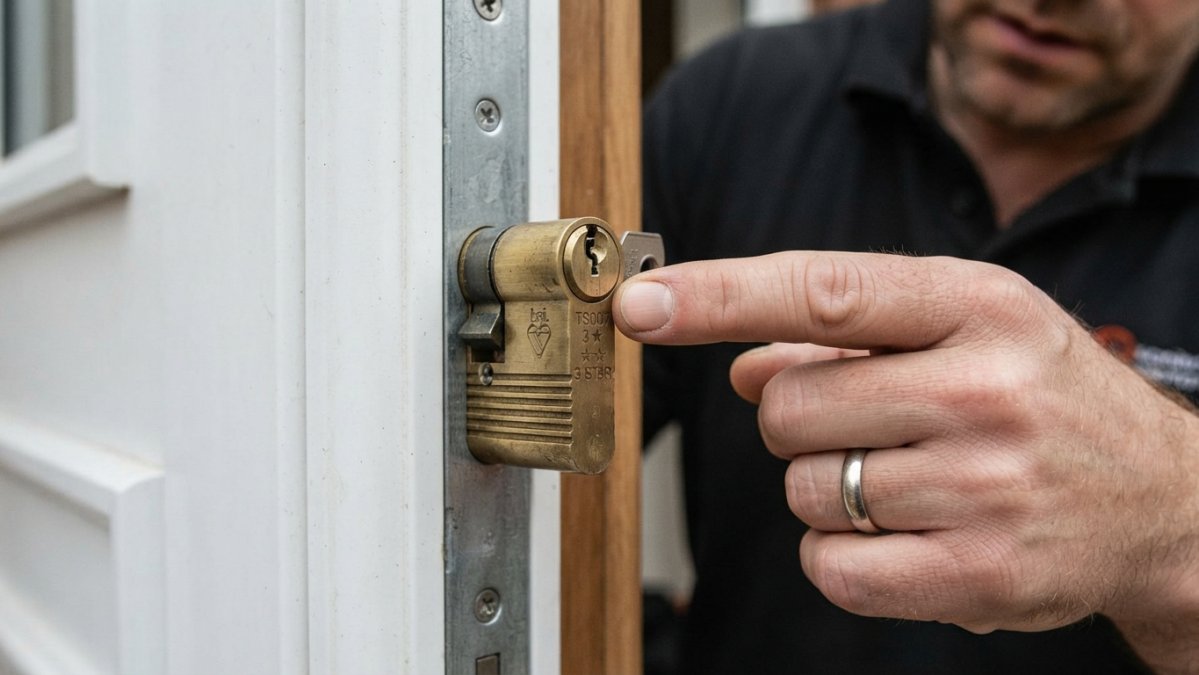
Look for these physical features:
Call us 24/7: +44 77321 89721 →
Anti-snap cylinders often have visible reinforcement ridges or grooves running along the body. These aren't purely decorative, they strengthen the cylinder and make snapping harder. Standard cylinders are smooth; anti-snap ones have texture.
Check the keyway opening. Anti-snap cylinders sometimes have a different shape or reinforced edges around the keyway. The opening may be slightly narrower or have protective flanges.
Examine the back of the cylinder. Some anti-snap designs have a secondary pin or blocking mechanism visible from behind. This is the internal security feature that prevents the cylinder from being removed even if the front snaps.
Feel the cylinder material. Anti-snap cylinders are often made from hardened brass or reinforced metal. Standard cylinders feel lighter and thinner. A heavier cylinder usually means better anti-snap protection.
Look for any visible damage or wear. Cracks, dents, or corrosion suggest the lock is ageing. Even if it currently has anti-snap protection, damage reduces its effectiveness.
If you see the TS007 3 star marking during this inspection, you're done, you have a certified anti-snap lock. If you see no markings and no reinforcement features, your lock likely needs upgrading.
Euro Cylinder Lock Replacement: When and Why
You should replace your euro cylinder if it lacks anti-snap protection, shows signs of wear, or no longer turns smoothly. Replacement is straightforward and far cheaper than dealing with a break-in.
Replace your cylinder if:
- It has no TS007 marking
- It's a 1-star or 2-star lock (upgrade to 3-star)
- It's over 15 years old
- It sticks or turns with difficulty
- It's been damaged or tampered with
- Your insurance requires TS007 3-star protection
Replacement becomes urgent after a break-in attempt or if you've just moved into a property and don't know the lock's history. You can't assume the previous owner used secure cylinders.
The replacement process is simple. You unlock the door and turn the key to the 3 o'clock position. A small screw appears inside the door. Remove this screw, and the cylinder slides out. Insert the new anti-snap cylinder and reverse the process.
Most homeowners can do this themselves in under 10 minutes. If you're uncomfortable with it or your lock is stiff, WS Locksmiths can handle the replacement quickly.
When ordering a replacement, remember to measure your cylinder correctly first. Bring those measurements with you or provide them when ordering. A mismatched cylinder won't work.
After installation, test the key. It should turn smoothly from the locked to unlocked position. If it sticks or feels wrong, the cylinder may not be seated properly. Remove it and try again.
Upgrading to an anti-snap lock is one of the most cost-effective security improvements you can make. It's faster and cheaper than upgrading doors or frames, yet it closes a major vulnerability.
Common Mistakes to Avoid When Checking Your Lock
Most people make simple errors when inspecting their locks. These mistakes can lead to buying the wrong replacement or missing signs of a weak lock.
Don't assume all TS007 locks are equal. The star rating matters. A 1-star lock is not the same as a 3-star lock. Always check for the star count, not just the TS007 marking.
Don't measure only the total length. You need both measurements: the distance from the keyway to the outside of the door, and from the keyway to the inside. Measuring only one will give you an incomplete picture.
Don't ignore visible damage. A lock with cracks, rust, or dents may have lost its anti-snap protection even if it has the right markings. Physical damage compromises the reinforced structure.
Don't confuse keying with security. A lock that turns smoothly isn't necessarily anti-snap. Smooth operation and security are separate things. Check the markings, not just how the key feels.
Don't buy a replacement without confirming your measurements. Installing a cylinder that's too long or too short wastes money and leaves your door unsecured. Double-check before you order.
Don't assume older locks are automatically weak. Some older cylinders do have anti-snap features. Check the markings first. Don't replace a lock just because it's old, replace it because it lacks proper certification.
Don't overlook the grab length. This is the distance from the keyway to the outer edge. Get this wrong, and the cylinder won't align properly with your lock body. It's as important as the total length.
Don't panic if you can't find markings immediately. They're small and sometimes hard to spot in poor light. Use a torch and look carefully.
Checking whether your lock is anti-snap is quick and requires no special tools. Look for the TS007 3 star marking, measure your cylinder accurately, and inspect for physical reinforcement.
We're available 24/7 for emergency lockouts and security upgrades. Call us on +44 77321 89721 to arrange a replacement or discuss your lock security.
Frequently Asked Questions
How can I tell if my lock is anti-snap without removing it?
Check the cylinder for TS007 markings or the British Standard Kitemark. Look for a metal bar or reinforcement running through the middle of the cylinder. Anti-snap locks often have a slightly thicker appearance than standard cylinders. If you cannot see clear markings, measure the cylinder length, anti-snap models typically measure between 30mm and 35mm from the edge of the door. When in doubt, contact a qualified locksmith who can assess your lock safely.
What does a TS007 3 star lock certification mean?
TS007 3 star is the highest security rating for euro cylinders under British Standards. It means the lock has passed rigorous anti-snap, anti-drill, and anti-pick tests. A 3-star rated lock resists snapping attacks for at least 15 minutes, significantly exceeding standard cylinders. This certification is recognised by insurers and meets requirements for many insurance policies. If your cylinder carries this marking, your lock offers strong protection against forced entry.
How do I know if my euro cylinder needs replacement?
Replace your euro cylinder if it lacks TS007 markings, shows visible damage or wear, feels loose in the door, or has been compromised by attempted break-ins. If you cannot identify any security certification on your cylinder, replacement is recommended. Older cylinders manufactured before anti-snap standards became standard are particularly vulnerable. A qualified locksmith can assess whether your cylinder meets current security standards and advise on replacement options suited to your property type.
What should I look for when measuring a euro cylinder?
Measure from the centre of the screw hole on one side to the centre of the screw hole on the opposite side. Record the total length in millimetres. Anti-snap cylinders typically measure between 30mm and 35mm, though sizes vary. Note the external and internal measurements separately if they differ. Having accurate measurements ensures a correctly fitting replacement cylinder. If you're unsure about your measurements, a locksmith can verify them and source the right replacement for your door.