 blog
5 Best Practices for Home Security
Table of Contents
- Why Home Security Best Practices Matter
- 1. Install and Upgrade to High-Security Locks
- How to Secure a Front Door Properly
- 2. Establish a Regular Door Lock Maintenance Routine
- Why Do Door Locks Jam and How to Prevent It
- 3. Create a Home Security Checklist You Actually Use
- 4. Control Access and Secure Entry Points
- 5. Respond Quickly to Security Breaches
- Frequently Asked Questions
Last Updated: October 20, 2026
Why Home Security Best Practices Matter
Your home is your sanctuary. Homes with strong security foundations rarely face break-ins.
Understanding the 5 best practices for home security comes down to basics. People install expensive alarms but ignore worn locks, or add cameras but never check door frames. These gaps create opportunities.
5 best practices for home security form a practical framework that works. They're not complicated, but they require intention. Below, we'll walk through each one and show you how to implement them.
1. Install and Upgrade to High-Security Locks
Start here. Your locks are the first line of defence, and they matter more than most people realise.
Standard locks fail predictably. Older pin tumbler locks can be picked or bumped, and cheaper locks snap under force. Anti-snap locks are now the industry standard recommendation. If your front door still has a basic lock, upgrading is your single most impactful security move.
High-security locks use additional pins or rotating components that make picking nearly impossible, and they're engineered to resist snapping, drilling, and bumping. The investment is modest compared to the protection gained.
Pros of upgrading:
- Dramatically reduces forced entry risk
- Works passively, no batteries, no monitoring required
- Increases property value and insurance standing
- Provides immediate, visible security
Cons to consider:
- Requires professional installation for proper fit
- Higher upfront cost than standard locks
- May need new keys or key systems if replacing multiple locks
- Older doors may need frame reinforcement
Start with your front door, then address side and back entrances. Each lock should meet British Standard BS 3621 or equivalent anti-snap certification. Professional guidance matters here, since installation quality determines how well locks actually work.
How to Secure a Front Door Properly
Your front door is the most obvious entry point and the one burglars test first. Securing it means addressing the lock, the frame, and the door itself.
Start with the lock. Position it in the upper half of the door, roughly 100mm below the lock rail. This placement makes it harder to reach through a broken window. Install a deadlock, not a spring latch, which offers minimal resistance.
Next, reinforce the frame. A strong lock means nothing if the frame splinters. Check that the frame is solid wood or metal, not hollow.
The door itself should be solid, not hollow-core. If replacement isn't practical, reinforce the area around the lock with a metal plate on the inside to prevent the bolt being pushed through.
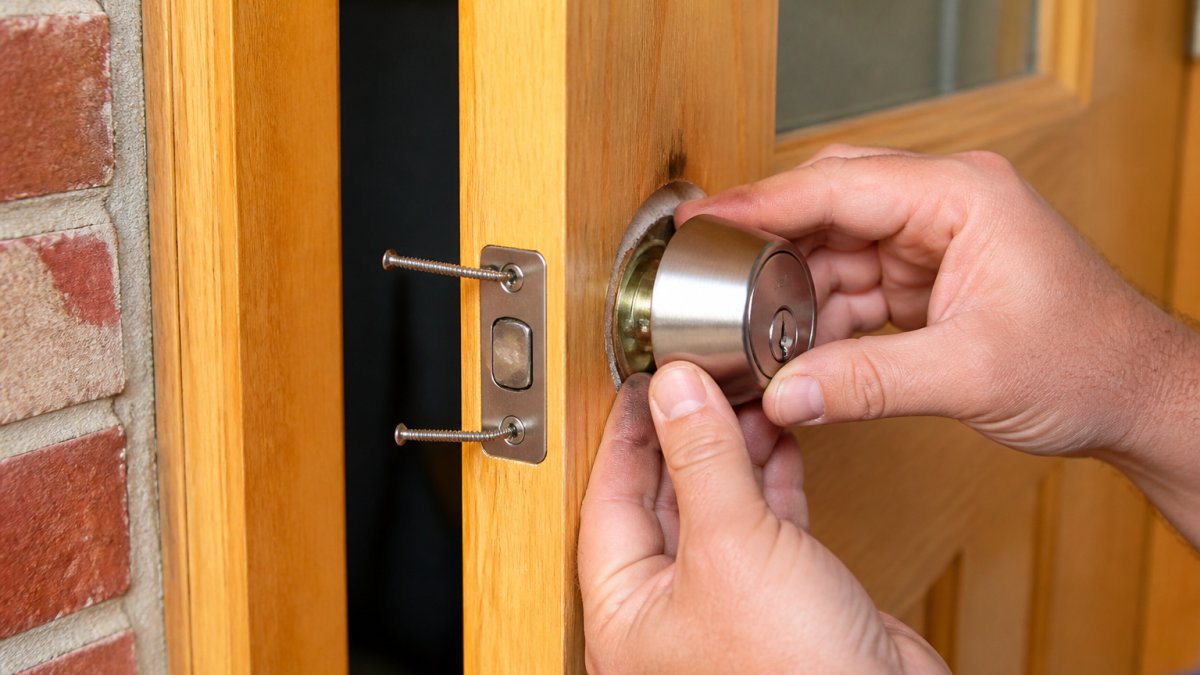
Installation checklist:
- Deadlock positioned 100mm below lock rail
- Strike plate secured with long frame screws (at least 75mm)
- Door frame solid and undamaged
- Door itself solid wood or reinforced
- Lock operates smoothly without resistance
Incorrect installation undermines the lock's effectiveness, while a professional ensures proper alignment, full bolt engagement, and frame security in one visit.
2. Establish a Regular Door Lock Maintenance Routine
A secure lock only stays secure if it's maintained. Locks deteriorate, jam, and stick, and a jammed lock is a liability: it's either forced open or left unlocked out of frustration.
Maintenance is simple and costs nothing. Weekly, work your key in and out of each lock 10-15 times to keep the mechanism clean and pins aligned. If the key feels stiff, apply a graphite lubricant (not WD-40, which attracts dust), available at any hardware shop for a few pounds.
Check your locks seasonally for rust, corrosion, or visible key wear. Grinding sounds when turning the key indicate internal wear, so contact a locksmith before the lock fails completely.
Maintenance schedule:
- Weekly: operate each lock 10-15 times
- Monthly: apply graphite lubricant if needed
- Quarterly: inspect for rust, corrosion, or damage
- Annually: have a professional inspect and service high-security locks
Pros of regular maintenance:
- Prevents sudden lock failure
- Extends lock lifespan significantly
- Costs virtually nothing
- Catches problems before they become emergencies
Cons or challenges:
- Requires consistency, easy to forget
- Some locks need professional servicing
- Graphite can stain if applied carelessly
- Worn locks may need replacement despite maintenance
The goal is simple: a lock that works smoothly every time. A sticky or grinding lock is telling you something is wrong.
Why Do Door Locks Jam and How to Prevent It
Locks jam for specific reasons. Understanding them helps you prevent the problem.
Dirt and debris is the most common cause. Dust, pollen, and particles accumulate inside the mechanism, so the key can't move freely and the bolt sticks. Graphite lubricant displaces dirt without attracting more.
Rust and corrosion happen when locks are exposed to moisture without protection, especially on damp properties or near coastal areas. Rust creates friction, making the key turn harder until it won't turn at all.
Misalignment occurs when the door frame shifts or settles. If it moves even a few millimetres, the bolt no longer aligns with the strike plate, turning the key requires extra force, and the lock wears faster until it jams.
Worn pins and springs happen with age and heavy use. The internal springs weaken. The pins wear down. Eventually, the mechanism becomes too loose to function reliably. This is irreversible, the lock needs replacement.
Prevention strategy:
- Apply graphite lubricant monthly
- Keep the lock dry, use a cover or shelter
- Inspect frame alignment annually
- Replace locks showing signs of wear before they fail
Regular maintenance catches these problems early. A sticking lock needs lubricant; a grinding lock signals rust. Listen to what your locks tell you.
3. Create a Home Security Checklist You Actually Use
Most people have security habits they forget to maintain. You lock the front door but leave the back window unlatched. You arm the alarm but leave a side gate open. You upgrade one lock but ignore the others.
Call us 24/7: +44 77321 89721 →
A checklist solves this. It's a physical reminder that works even when you're tired or distracted.
Your checklist should be specific to your property. A terraced house has different vulnerabilities than a detached home. A ground-floor flat needs different checks than an upstairs one. Build your checklist around your actual entry points.
Sample checklist for a typical home:
- Front door: deadlock engaged, key removed
- Back door: deadlock engaged, key removed
- Side door (if present): deadlock engaged, key removed
- Ground-floor windows: closed and latched
- Upstairs windows: closed (locking optional)
- Back gate: locked or secured
- Garage door: closed and locked
- Alarm system: armed
- Lights: on timer or manual control set
- Valuables: out of sight from windows
Print and laminate this checklist and post it near your main exit. Run through it every time you leave. The first week feels tedious, but by week three it's automatic.
Pros of a checklist:
- Eliminates guesswork and memory lapses
- Takes 90 seconds to complete
- Catches vulnerabilities before you leave
- Builds consistent security habits
Cons or challenges:
- Requires discipline initially
- Can feel repetitive
- Doesn't prevent opportunistic break-ins while you're home
- Needs updating if you change locks or entry points
The checklist is your insurance policy: every time you leave, your home is as secure as you've made it, with no "did I lock that?" moments.
4. Control Access and Secure Entry Points
Every entry point is a potential vulnerability. Most homes have more entry points than owners realise.
Start by mapping them. Front door. Back door. Side doors. Garage entry. Ground-floor windows. Basement access. Utility room doors. Patio doors. Each one needs evaluation.
For doors, the standard is clear: solid door, strong frame, anti-snap deadlock, reinforced strike plate. For windows, the standard varies by location. Ground-floor windows need locks.
Garage doors and side gates often get neglected. A garage door left unlocked is an entry point. A side gate left open gives access to your back garden and rear doors. Secure these as carefully as your front entrance.
Entry point security checklist:
| Entry Point | Lock Type | Priority | Notes |
|---|---|---|---|
| Front door | Anti-snap deadlock | Critical | Most targeted entry |
| Back door | Anti-snap deadlock | Critical | Secondary target |
| Side door | Deadlock or bolt | High | Often overlooked |
| Ground-floor windows | Window locks | High | Accessible from street |
| Patio door | Multi-point lock | High | Weak standard locks |
| Garage entry | Deadlock | Medium | Access to interior |
| Garage door | Padlock or automatic lock | Medium | Prevents tool theft |
| Side gate | Padlock or bolt | Medium | Controls garden access |
The goal isn't to make every entry Fort Knox. It's to make your home a less attractive target than others. Burglars assess risk and effort. A home with multiple secure entry points takes too long. They move on.
Pros of comprehensive access control:
- Addresses all vulnerabilities systematically
- Makes your home visibly less attractive to opportunists
- Creates multiple barriers, even if one fails, others remain
- Reduces stress about which doors are actually secure
Cons to consider:
- Requires investment in multiple locks
- May need professional installation for some doors
- Creates more keys to manage (or need for master key system)
- Takes time to implement across a whole property
The most common mistake is over-securing one door and ignoring others. A burglar simply tries the next one. Even distribution of security is more effective than concentrated effort on a single entry point.
5. Respond Quickly to Security Breaches
A break-in, a forced lock, a damaged frame, these aren't just security problems. They're emergencies that need immediate attention.
The first step is obvious: contact the police and document everything for insurance. Take photographs. Keep receipts. File a report.
A forced lock won't work. A damaged frame won't hold a new lock. A broken window is an open invitation. These need emergency repair before your home is genuinely secure again.
This is where professional help becomes essential. A locksmith can assess the damage, determine what needs replacement, and install secure locks the same day.
Response priorities (in order):
- Secure the immediate breach (board up window, lock door with temporary measure)
- Contact police and file report
- Contact insurance and document damage
- Call a locksmith for professional assessment and repair
- Install upgraded locks while you're already addressing the damage
- Review security and address any related vulnerabilities
Pros of rapid response:
- Regains security quickly
- Prevents secondary break-ins while repairs are pending
- Allows professional assessment of what actually failed
- Provides opportunity to upgrade rather than just replace
Cons to consider:
- Emergency callouts cost more than standard appointments
- Stress and disruption of the incident itself
- Insurance may have specific requirements for repairs
- May reveal additional vulnerabilities during assessment
The lesson from most break-ins isn't that security is impossible. It's that the entry point had a specific weakness. A lock that didn't meet standard. A frame that was damaged.
Home security isn't about creating an impenetrable fortress. It's about removing easy targets. Strong locks, regular maintenance, comprehensive entry point coverage, and quick response to problems form a foundation that works.
If you've experienced a break-in, a lockout, or damaged locks, don't wait for a convenient time. We provide emergency repairs, professional lock assessments, and anti-snap lock installations across the local area.
Frequently Asked Questions
What are the most important home security best practices for renters?
Renters should focus on practices that don't require permanent changes: use portable door wedges and window locks, maintain existing locks through regular checks, and keep an inventory of entry points. Discuss any security upgrades with your landlord before making changes. A home security checklist helps track which doors and windows need attention, and regular maintenance prevents lock jamming that could compromise access during emergencies.
How often should I maintain my door locks?
Check your locks monthly for smooth operation and signs of wear. Door lock maintenance should include cleaning the lock mechanism, testing the key turn, and listening for grinding sounds. If your door locks jam or stick, address it immediately, jamming often signals internal wear. Seasonal maintenance before winter and after heavy use periods helps catch problems early and extends lock lifespan significantly.
Can I secure a front door without replacing the lock?
Yes, you can strengthen security without full replacement. Reinforce the door frame with longer screws in the strike plate, add a door brace or wedge, install a security bar, and ensure hinges are secure. However, if your existing lock shows wear, jamming, or damage, replacement is more reliable. How to secure a front door depends on your current lock's condition, professional assessment helps you avoid false economy.
What should I do if my door lock jams suddenly?
Stop forcing the key immediately to avoid breaking it inside. Apply graphite powder or silicone-based lubricant into the keyhole, then work the key gently in and out. If jamming persists, don't attempt further DIY fixes, jamming usually indicates internal damage. Why do door locks jam often relates to debris, misalignment, or worn pins. Contact a professional locksmith for diagnosis and repair to prevent being locked out.